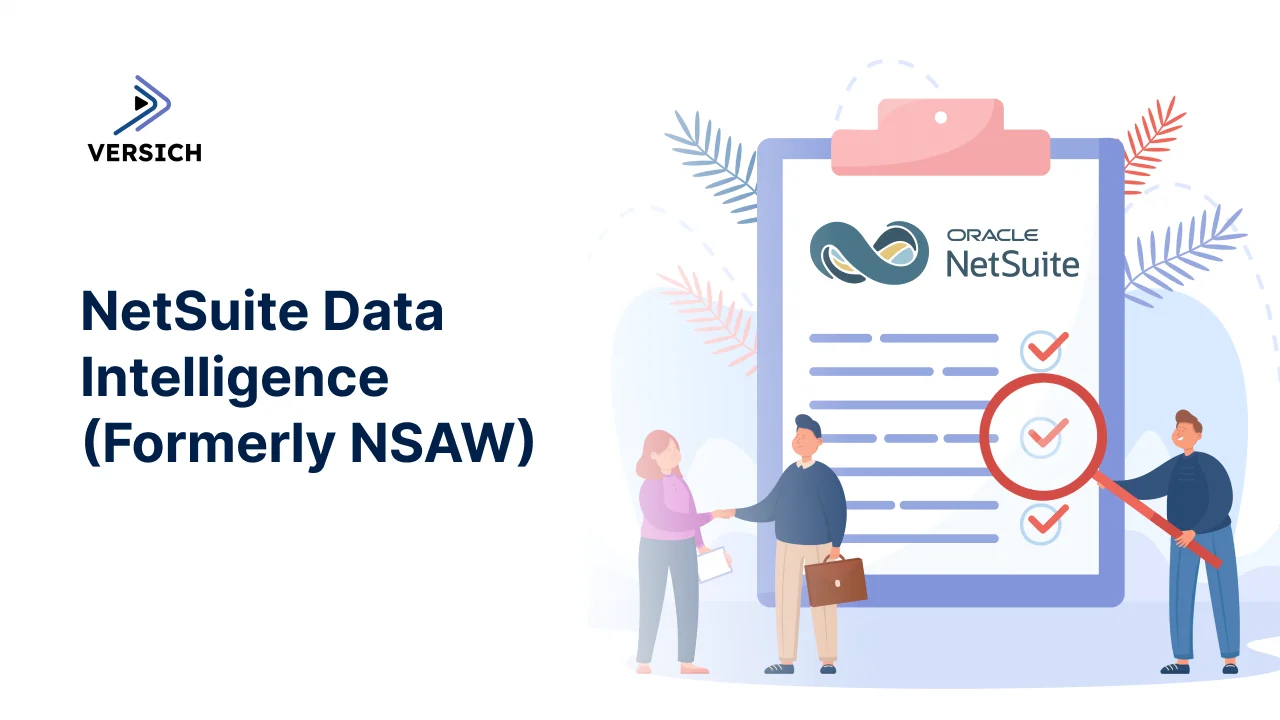
NetSuite Analytics Warehouse, which many teams call NSAW, has a new name: NetSuite Data Intelligence. NetSuite announced it on October 26, 2026, during SuiteWorld, and described the product as "formerly known" as NetSuite Analytics Warehouse. This post explains what changed, what the product includes today, and what to check in your account.
What changed
The name changed, and NetSuite added conversational analysis around it. In the SuiteWorld 2026 recap, we covered the full announcement. For the data warehouse, three points matter.
| Area | What NetSuite says | What it means for you |
|---|---|---|
| Name | NetSuite Analytics Warehouse is now NetSuite Data Intelligence | Search, documentation and internal wording will use both names for a while |
| Ask Oracle | A NetSuite Data Intelligence Agent supports conversational analysis of your data | Ask questions in plain language instead of building a report first |
| Insights | A Deep Insights Agent delivers business-specific insights and recommendations | Move from "what happened" to "what to do next" |
NetSuite has not given dates for the two agents, and it has not said when the new name appears everywhere in the product. Plan around what is live today, and treat the agents as announced.
What NetSuite Data Intelligence is
As per NetSuite's product page, NetSuite Data Intelligence is NetSuite's data warehouse: a prebuilt cloud solution built on Oracle Autonomous Data Warehouse and Oracle Analytics Cloud. It brings NetSuite and third-party data into one place so finance, sales and operations teams can find the drivers behind trends and get alerts on predicted outcomes. It is sold as an add-on module.
If you already use NSAW, this is the same product. Our NetSuite Analytics Warehouse page describes how we implement it.
What the platform includes
The product page lists these building blocks:
- Prebuilt NetSuite pipeline and reports. Financials Foundation templates cover commonly used reports such as budget vs. actuals, sales by customer and purchases by item.
- Data connections. It transfers NetSuite saved searches and data sets, supports no-code data flows and data transforms, and works with a REST API and the NetSuite Integration Platform.
- A semantic layer. It translates complex data structures into business terms, so users work with familiar names.
- Visualization. More than 40 visualization types, with drill-down and filtering.
- Machine learning. Prebuilt models for churn, stockouts, spend classification and product recommendations, plus AutoML and Oracle Machine Learning for custom models.
- AI assistants. An Oracle Analytics AI Assistant, an AR Analytics Assistant and a Deep Insight Agent for next-step recommendations.
What changed earlier in 2026
Two changes arrived before the rename, in NetSuite 2026.1, announced in February. The NetSuite AI Connector Service connects outside AI tools to your warehouse data so users can query it in natural language. Data flows also moved from 2 million to 5 million rows per source. NetSuite's article still used the old name and said features and timing may change, so test in a Release Preview account before you rely on either.
What to check in your account
- Confirm which name your users see. The interface and help pages may show either name for a while. Tell your team they are the same product.
- Review your contract and order form. NetSuite has not said whether licensing wording changes. Ask your account team in writing.
- List your current reports and data flows. Know what is in production before any new agent or connector is switched on.
- Check row volumes. If a data flow was split to stay under 2 million rows, you may be able to simplify it with the 5 million limit.
- Decide who may ask questions of the data. Conversational tools use the permissions you set, so review access roles first.
- Update internal documents. Training guides, runbooks and dashboards often say "NSAW". Add the new name next to it rather than replacing it.
If an NSAW implementation stalled or a warehouse is not delivering trusted numbers, see our NSAW implementation rescue and recovery service.
Where integrations fit
Data Intelligence depends on clean data coming in. If your warehouse also pulls from other systems, the NetSuite Integration Platform and our NetSuite integration services cover how those feeds are built. For report design on top of the warehouse, see our NetSuite reporting services.
Plan your Data Intelligence next steps
If you want help deciding what to enable, what to clean up first, or whether your warehouse needs repair, talk to the Versich team.