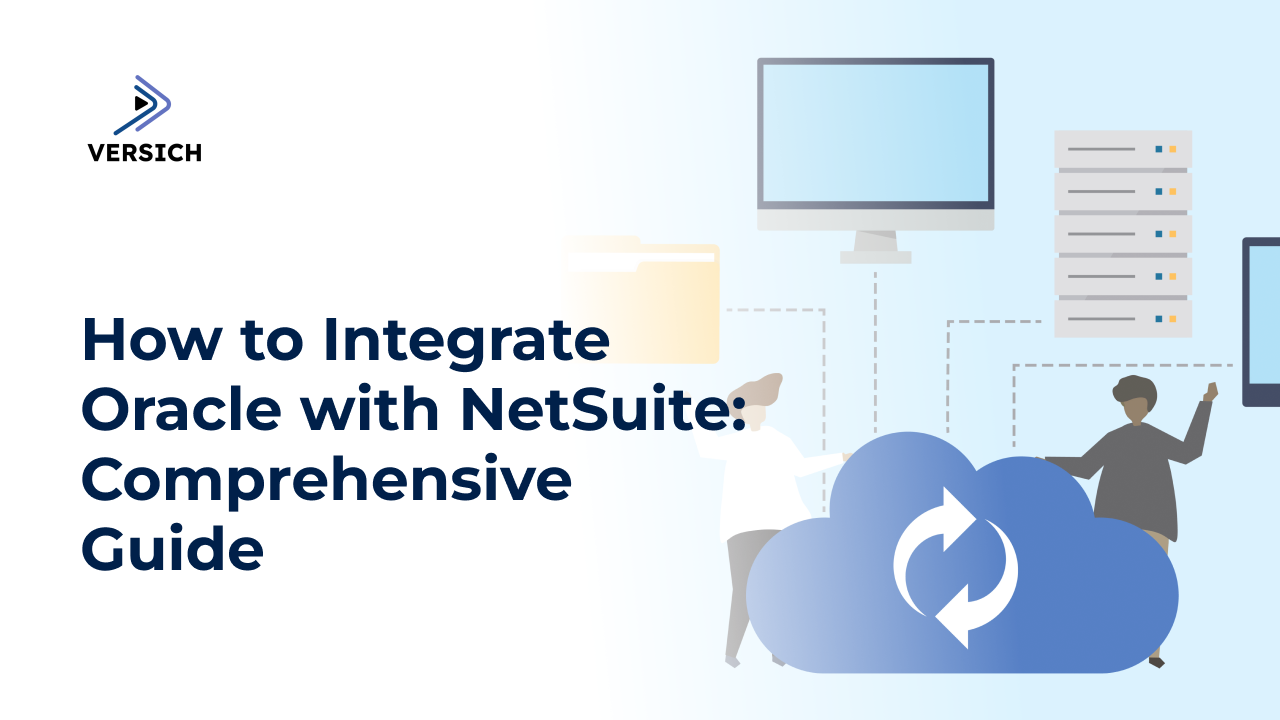
You've made a smart investment in NetSuite ERP to streamline your business operations, but now you may be hearing about "Oracle integration" to connect it with Salesforce, Shopify, or your data warehouse. Since Oracle acquired NetSuite in 2016, the terminology can become confusing. Whether you're looking for Oracle Integration Cloud (OIC) to link NetSuite with third-party applications, Oracle EPM for financial planning, or middleware platforms like Celigo to connect your systems, understanding your options is the first step toward a successful NetSuite integration.
NetSuite serves over 43,000 customers worldwide, making integration capabilities crucial for modern business operations.
Certified NetSuite partners report an 85% project success rate.
66% of organizations experience enhanced operational efficiency after integrating with NetSuite.
Pre-built connectors shorten the implementation time from months to just weeks.
NetSuite integrations need to consider governance limits and throttling; Oracle’s NetSuite Adapter client app can support up to 100 concurrent requests.
Understanding the 'Why' Behind Oracle-NetSuite Integration: Business Value and Key Benefits
Before diving into the technical aspects, it's important to grasp what "Oracle-NetSuite integration" means in a practical sense. There are three distinct scenarios:
Oracle Integration Cloud (OIC): An iPaaS solution from Oracle that connects NetSuite with other business applications using pre-built adapters.
Oracle EPM Integration: Linking Oracle's Enterprise Performance Management tools with NetSuite for financial planning and analytics.
Third-Party System Connections: Using middleware platforms to connect external applications such as Salesforce, Shopify, or custom databases to NetSuite.
The business rationale for integration is strong. Organizations can eliminate manual data entry hours and reduce error rates by 85-95% when removing manual processes.
Real-time visibility across sales, inventory, and financials.
Faster order processing that enhances customer satisfaction.
Accurate reporting without the need for spreadsheet reconciliation.
Scalable operations that grow alongside your business.
Mapping Your Integration Journey: Defining Scope and Data Flows
Every successful integration project begins with a clearly defined scope. Before selecting tools or writing any code, document precisely what data needs to flow between systems and in which direction.
What data entities need to sync? (customers, orders, inventory, invoices)
In which direction does data flow? (one-way or bi-directional)
What's your transaction volume? (daily order count, customer record changes)
What's your tolerance for latency? (real-time sync vs. scheduled batches)
Which system serves as the "source of truth" for each data type?
Data Mapping Best Practices
When connecting Oracle products or third-party systems to NetSuite, field mapping is crucial for project success or failure. NetSuite employs specific field names and data formats that must align with your source systems. For instance, mapping Salesforce to NetSuite typically entails:
Salesforce "Account Name" → NetSuite "Customer Name."
Salesforce "Opportunity Amount" → NetSuite "Estimated Total."
Salesforce "Close Date" → NetSuite "Expected Close."
Collaborating with seasoned NetSuite implementation consultants can help identify these mappings before development commences, avoiding expensive rework later.
Choosing Your Integration Method: APIs, Connectors, and Custom Solutions
NetSuite offers various avenues for integration, each carrying unique trade-offs in cost, complexity, and flexibility.
Pre-Built Connectors
The quickest route to integration employs certified connectors from Oracle's SuiteApp marketplace. These ready-made solutions address common scenarios:
Shopify Connector: Real-time order and inventory synchronization.
Salesforce Connector: Bi-directional customer and opportunity data exchange.
Amazon/eBay Connectors: Marketplace order fulfillment and payment processing.
Best for: Companies with standard integration needs and limited technical resources.
Oracle Integration Cloud (OIC)
OIC features numerous prebuilt adapters/connectors, alongside visual workflow tools to create complex integrations. The platform includes machine learning-capable data mapping that can reduce configuration time by up to 40-60%.
Best for: Organizations already utilizing Oracle products who seek single-vendor support.
Third-Party iPaaS Platforms
Platforms such as Celigo, AppSeConnect, and eZintegrations offer NetSuite-specific expertise through pre-built templates. Celigo boasts over 200 ready-made integration applications, while APPSeCONNECT offers an enterprise iPaaS with ISO 27001 certification.
Best for: NetSuite-centered environments requiring swift deployment.
Custom API Development
For unique requirements that lack pre-built connectors, custom development via SuiteTalk REST or SOAP APIs provides complete flexibility.
Cost: $150-$300/hour for experienced developers, plus ongoing maintenance.
Best for: Organizations with budgets over $50K and truly unique integration needs.
Leveraging NetSuite's Tools for Seamless Oracle Integration
NetSuite offers several native tools that lay the groundwork for any integration project.
SuiteTalk Web Services
SuiteTalk serves as NetSuite's main API framework, supporting both SOAP and REST protocols. The Oracle NetSuite Adapter capabilities include:
REST API: Modern, lightweight calls perfect for real-time integrations.
SOAP API: Comprehensive access to all NetSuite records and transactions.
Rate Limits: Vary by account and integration method - plan for throttling, retries, and batch patterns.
SuiteScript for Custom Logic
When standard integrations require customization, SuiteScript allows for server-side logic within NetSuite. Common applications include:
Data validation before record creation.
Custom field calculations during synchronization.
Automated workflow triggers based on integration events.
OAuth 2.0 M2M Authentication
Secure machine-to-machine authentication is vital for production integrations. NetSuite supports OAuth 2.0 M2M for RESTlets and web services, providing token-based authentication that never expires and can be revoked per application.
Implementing the Integration: Step-by-Step Execution and Best Practices
Once your planning is complete, below is a practical execution roadmap based on Oracle's documentation and industry best practices.
Step 1: Enable NetSuite API Features (15 minutes)
SuiteTalk (Web Services)
REST Web Services
SOAP Web Services
Token-Based Authentication under Managed Authentication
Step 2: Create Integration Record and Credentials (20 minutes)
Clearly name your integration (e.g., "OIC NetSuite Integration")
Set the state to Enabled.
Enable Token-Based Authentication (TBA).
Critical: Immediately copy the Consumer Key and Consumer Secret, as they are displayed only once.
Step 3: Generate Access Tokens (15 minutes)
Select your integration record from Step 2.
Choose the integration user or service account.
Assign Administrator role or a custom integration role.
Save the Token ID and Token Secret immediately.
Step 4: Configure Your Integration Platform (30 minutes)
Account ID: Available in Company Information settings.
WSDL URL: Format is https://[accountID].suitetalk.api.netsuite.com/wsdl/v[version]_0/netsuite.wsdl
Consumer Key/Secret: From Step 2.
Token ID/Secret: From Step 3.
SQORUS provides detailed screenshots for the setup of Oracle Integration Cloud.
Step 5: Build Data Mappings and Integration Flows (1-3 hours)
Trigger events: What initiates the integration (new order, updated customer).
Transformation logic: How fields are mapped between systems.
Error handling: Retry logic, alerts, and logging for failed transactions.
Most platforms provide templates for typical scenarios, such as Shopify orders to NetSuite, significantly expediting this step.
Testing and Validating Your Oracle-NetSuite Integration
Integration projects often exceed their budgets due to insufficient testing. A structured testing approach is essential to avoid costly issues in production.
Testing Phases
Test individual field mappings with sample data.
Validate data type conversions (dates, currencies, numbers).
Ensure custom field discovery operates correctly.
Execute end-to-end scenarios in the NetSuite sandbox.
Test with realistic data volumes (not just single records).
Confirm bi-directional synchronization doesn't result in duplicate records.
Have business users verify data accuracy.
Test exception scenarios (how the system behaves with incomplete data).
Ensure reports and dashboards reflect integrated data accurately.
Confirm the system can manage the expected transaction volume.
Test during simulated peak periods.
Monitor for API rate limit warnings.
Sandbox Best Practices
Always conduct tests in a NetSuite sandbox environment before moving to production. This helps identify issues such as missing custom fields, role permission gaps, and data format inconsistencies between environments.
Need assistance identifying gaps in your integration testing? We offer a complimentary consultation to evaluate your approach.
Post-Integration: Maintenance, Monitoring, and Optimization
Going live is just the start. Ongoing maintenance is vital to ensure your integration continues to provide value.
Monitoring Essentials
Error alerts: Set up email notifications for any failed transactions.
Daily log reviews: Check sync logs for the first two weeks, then transition to weekly checks.
SLA definition: Establish a response time for error resolution (e.g., investigate within 4 hours).
Performance baselines: Document normal success rates (aim for 98%+) and set alerts for drops below this threshold.
Quarterly Health Checks
Plan periodic reviews to update field mappings as business processes change, eliminate outdated workflows, analyze API usage against rate limits, and assess new features from platform updates.
Version Management
Oracle issues two major NetSuite updates each year. Integrations that use hardcoded WSDL versions may break after updates. Best practice: always utilize version-agnostic endpoints and test integrations post each NetSuite release.
Common Challenges and Solutions in Oracle-NetSuite Integration
Even well-thought-out integrations can face hurdles. Here are the most frequent challenges, along with proven solutions.
Authentication Errors
Problem: "Invalid Login" error despite correct credentials.
Solution: Confirm that Token-Based Authentication is enabled in NetSuite features. Verify that the integration role has Web Services set to Full permission in your role management settings.
API Rate Limits
Problem: 429 errors during high-volume synchronization operations.
Solution: Implement batch processing (synchronize 100 records every 15 minutes instead of 1,000 at once). Schedule large synchronizations during off-peak hours (2-6 AM). Utilize exponential backoff retry logic.
Missing Custom Fields
Problem: Integration platform fails to recognize NetSuite custom fields.
Solution: Activate Custom Fields Discovery before building integrations - this approach eliminates 80% of "missing field" errors. Regenerate field definitions after adding new custom fields.
Data Discrepancies
Problem: Records don’t match between systems post-sync.
Solution: Implement unique identifier matching (email + company name). Use Change Data Capture for real-time synchronization and run daily reconciliation reports to compare record counts.
When to Call for Help
Simple Shopify or Amazon order synchronization using pre-built connectors.
Basic customer data sync under 1,000 records.
Email notification workflows.
Multi-subsidiary NetSuite configurations.
Custom SuiteScript development requirements.
High-volume integrations (10,000+ transactions daily).
Compliance-sensitive industries require audit trails.
Why Versich Is Your Trusted Partner for Oracle and NetSuite Integrations
Selecting the right consulting partner is crucial for complex integration projects. We bring unique benefits to Oracle-NetSuite integration:
Certified Expertise: As a NetSuite Solution Provider, we've garnered recognition, including the 2022 Alliance Partner Spotlight Award for both Retail and SuiteCommerce categories.
Deep Technical Knowledge: Our expert team specializes in custom workflows, OAuth authentication, and complex NetSuite integrations across wholesale distribution, manufacturing, and eCommerce.
Community Values: Based in Wisconsin, we believe working with us should feel like calling your neighbor for a helping hand - familiar, reliable, and straightforward.
Whether you require assistance in evaluating integration options, designing data flows, or implementing complex multi-system architectures, contact us to discuss your project. For immediate expert guidance on your NetSuite integration challenges, take advantage of our free consultation.