Procurement teams are expected to control spending, manage supplier risk, improve purchasing speed, maintain policy compliance, and provide accurate information to finance and leadership. However, many teams still spend a large part of their working day copying information between systems, checking spreadsheets, following up on approvals, creating purchase orders, validating supplier records, and matching invoices manually.
These tasks are necessary, but they rarely require the full expertise of a professional.
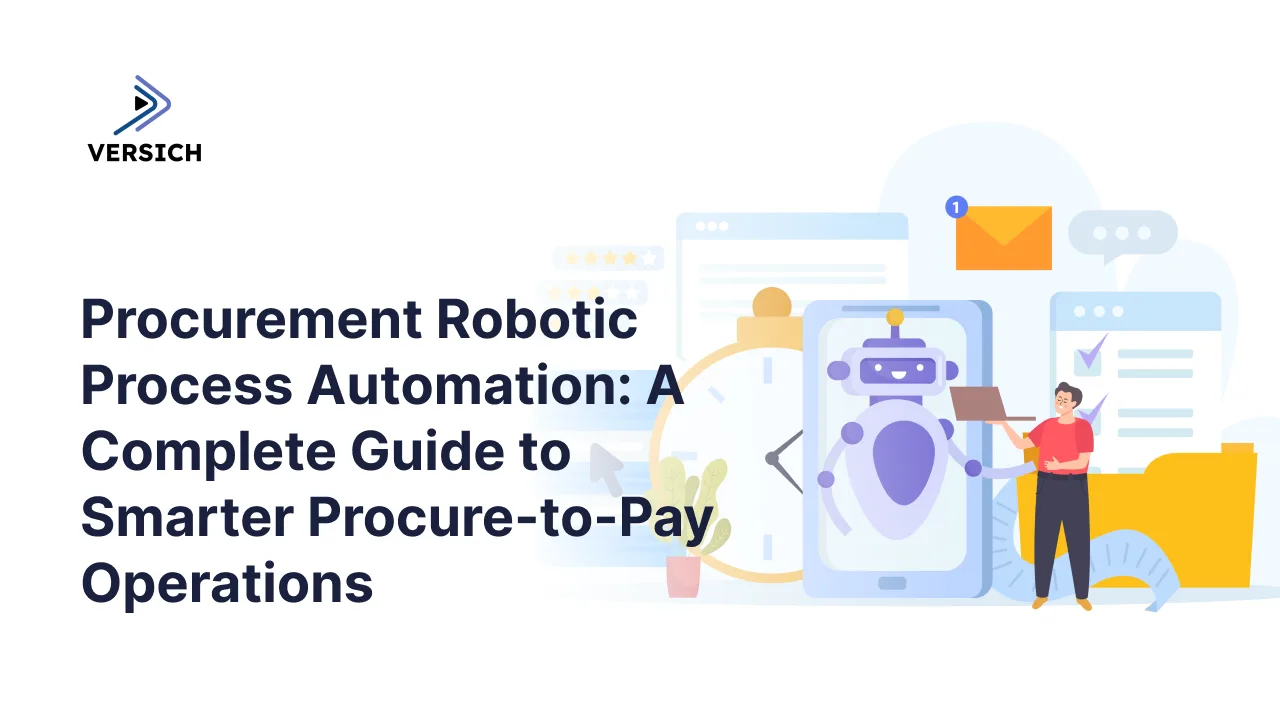
Procurement robotic process automation, commonly known as RPA in procurement, uses software bots to perform repetitive and rules-based activities across procurement platforms, enterprise resource planning systems, spreadsheets, email inboxes, supplier portals, and document repositories.
Unlike physical robots, RPA bots operate inside digital systems. They can sign in to an application, retrieve information, enter data, compare records, create transactions, send notifications, and route exceptions according to predefined instructions. Basware describes RPA as virtual software robots that reproduce desktop actions according to business rules, while Skill Dynamics identifies high-volume processes such as purchase order creation and invoice processing as strong procurement automation candidates.
When implemented correctly, RPA can reduce repetitive work, shorten procurement cycle times, improve data consistency, and give procurement professionals more time for supplier negotiations, category management, risk analysis, and strategic sourcing.
However, RPA is not a solution to every procurement problem. A bot cannot repair a poorly designed process, make reliable decisions without clear rules, or create missing data. Successful automation requires standardized workflows, dependable information, defined exceptions, appropriate governance, and ongoing monitoring.
This guide explains how robotic process automation works in procurement, which processes are suitable, where RPA differs from AI and traditional workflow automation, and how organizations can build an automation programme that delivers sustainable value.
What Is Procurement Robotic Process Automation?
Procurement robotic process automation is the use of configurable software bots to execute repetitive digital activities within sourcing, purchasing, supplier management, accounts payable, and reporting processes.
The bot follows a defined sequence in much the same way an employee would. It may open an email attachment, extract purchase request details, validate the supplier against an approved list, enter the information into an ERP system, create a purchase order, route the transaction for approval, and notify the requester when the order is issued.
RPA is especially useful when a procurement process crosses several systems that do not communicate effectively. For example, an organization may receive purchase requests through email, manage approvals in a workflow platform, create purchase orders in NetSuite, store supplier documents in SharePoint, and receive invoices through a separate accounts payable inbox.
A software bot can connect these steps without requiring employees to repeatedly move information from one application to another.
RPA generally works best with processes that are:
Repetitive and high volume
Based on clearly documented rules
Performed through digital applications
Supported by structured or predictable data
Stable enough to automate
Time-consuming but low in strategic value
Vulnerable to manual data-entry errors
Measurable through cycle time, cost, accuracy, or workload
The bot performs the routine steps, while procurement and finance professionals remain responsible for approvals, supplier decisions, policy exceptions, commercial judgment, and risk management.
Is RPA the Same as Procurement Automation?
RPA is one form of procurement automation, but the two terms are not identical.
Procurement automation is a broader category that can include ERP workflows, application programming interfaces, supplier portals, electronic data interchange, integration platforms, optical character recognition, machine learning, artificial intelligence, and robotic process automation.
RPA is primarily an execution technology. It reproduces digital actions that a person would otherwise perform manually.
A native ERP workflow, by comparison, automates activities inside a specific application. An API transfers information directly between systems. Intelligent document processing extracts information from invoices and other documents. AI can classify information, interpret language, recommend actions, or support decisions involving greater complexity.
Modern procure-to-pay environments increasingly combine these technologies. UiPath’s current procure-to-pay model, for example, uses robots and API workflows to move data between procurement systems and ERPs, intelligent document processing to capture invoice information, and AI agents to support contextual steps and exception handling. The ERP remains in the system of record, while human review is retained for decisions outside approved rules.
RPA Compared with Other Procurement Technologies
Technology | Best Use | Example |
| Repeating user actions across applications | Copy approved requisition information into an ERP |
| Automating activities within the ERP | Route a purchase order for approval based on value |
| Reliable system-to-system data exchange | Synchronize suppliers between NetSuite and a procurement portal |
| Extracting information from documents | Capture supplier name, invoice number, and amount from a PDF |
| Classification, recommendations, and contextual decisions | Identify the likely reason for an invoice mismatch |
| Discovering bottlenecks and process variations | Find where purchase requests remain delayed |
| Coordinating multi-step activities using AI, bots, and people | Validate a request, resolve standard exceptions, and route complex cases |
The best procurement architecture does not force RPA into every process. It uses the most appropriate technology for each requirement.
When a dependable API is available, direct integration is often faster and easier to maintain than a bot that interacts with an application screen. RPA becomes particularly valuable when legacy systems, supplier portals, desktop applications, or external platforms do not offer practical integration options.
Why Procurement Is Well Suited to RPA
Procurement includes many recurring processes that follow predictable rules but span several departments and applications.
A purchase request may begin with an employee, move to a department manager, continue to procurement, enter an ERP system, reach the supplier, return through goods receipt, and finally pass to accounts payable. Every manual handoff creates another opportunity for delay, incomplete information, duplicate entry, or inconsistent data.
RPA can help by performing predictable actions consistently and keeping transactions moving between systems.
Procurement is particularly suitable for automation because it often involves:
Large transaction volumes
Repeated data entry
Standard documents
Defined approval levels
Approved supplier lists
Contracted prices
Matching requirements
Policy checks
Repetitive supplier communication
Regular reports and reconciliations
The objective is not to automate procurement professionals out of the process. It is to remove low-value administrative effort so that they can spend more time evaluating suppliers, negotiating contracts, managing categories, reducing risk, and improving organizational spending.
Where RPA Fits in the Procure-to-Pay Cycle
The procure-to-pay cycle generally covers the process of identifying a purchasing need through supplier payment. RPA can support several stages, but the level of automation should depend on process consistency, data quality, approval requirements, and exception rates.
1. Purchase Requisition Intake
Purchase requests may arrive through forms, spreadsheets, emails, service portals, or procurement applications. Employees may omit required information such as the cost centre, delivery location, supplier, product category, quantity, or business justification.
An RPA bot can monitor an approved intake channel, capture request information, check whether mandatory fields are complete, and create the requisition in the procurement or ERP system.
The bot can also compare the request with basic policies. It may check whether the supplier is approved, whether the requested item already exists in a catalogue, or whether the purchase exceeds the requester’s authority.
Incomplete or unusual requests can be returned to the employee or routed to a procurement specialist.
This helps procurement begin with cleaner information rather than spending time correcting requests after they have entered the purchasing process.
2. Purchase Approval Routing
Approval delays frequently occur because requests are emailed to the wrong person, remain unnoticed in an inbox, or require manual follow-up.
RPA can identify the appropriate approver according to the requester’s department, location, purchasing category, project, budget, or transaction value. The bot can send the approval request, issue reminders, monitor the response, and escalate overdue decisions according to service-level rules.
Where the ERP already provides a reliable approval engine, native workflow automation should normally remain the primary tool. RPA can support the surrounding steps when approvals involve email, spreadsheets, legacy systems, or external applications.
3. Purchase Order Creation
Creating purchase orders manually often requires the procurement of employees to transfer information from an approved requisition into an ERP system.
The employee may need to select the correct supplier, subsidiary, currency, payment terms, tax code, delivery address, department, classification, and purchasing category. Repeating these steps across hundreds of orders increases the possibility of inconsistent or incomplete records.
An RPA bot can read the approved requisition, validate the information against supplier and item data, and create the purchase order automatically. It can then route the PO for final approval or issue it directly when all policy conditions have been met.
RPA is widely recognized as suitable for high-volume, rules-based procurement activities such as PO creation because these processes follow repeatable steps and can often be executed without extensive human judgment.
4. Purchase Order Distribution and Acknowledgement
After a purchase order is approved, it must be delivered to the supplier and acknowledged.
A bot can generate the PO document, send it through email or upload it to a supplier portal, record the transmission date, and monitor for acknowledgement. When the supplier confirms quantities, pricing, and expected delivery dates, the bot can update the procurement system.
If the acknowledgement contains a pricing difference, unavailable item, delayed date, or changed quantity, the bot can route the issue to the appropriate buyer.
This reduces routine supplier follow-up while ensuring exceptions receive attention.
5. Supplier Onboarding and Master Data
Supplier onboarding often involves collecting registration details, bank information, tax documents, certifications, insurance records, and internal approvals.
Procurement professionals may need to validate the information, enter it into multiple systems, request missing documents, and confirm that due diligence has been completed.
RPA can transfer supplier information from an onboarding form into the ERP or supplier management platform. It can check whether mandatory fields are present, identify potential duplicate records, verify document expiration dates, and route the supplier for finance, legal, compliance, or procurement approval.
Sensitive decisions such as supplier selection, bank-account verification, sanctions review, and risk approval should remain subject to appropriate human controls. The bot can organize and validate the information, but it should not bypass governance requirements.
6. Request for Quotation Administration
Strategic sourcing requires judgment, market knowledge, negotiation, and supplier evaluation. However, the administrative steps surrounding an RFQ are often repetitive.
RPA can create sourcing events from approved templates, distribute documents to selected suppliers, monitor submission deadlines, download responses, check whether required fields are complete, and consolidate structured pricing information into a comparison file.
The sourcing team can then focus on evaluating commercial terms, delivery capability, quality, sustainability, and supplier risk.
Automation should support the sourcing decision rather than make a complex supplier award without appropriate review.
7. Contract and Price Compliance Checks
A purchase order may use the wrong supplier, price, discount, payment term, or contract reference.
An RPA bot can compare purchasing transactions against approved contracts, catalogues, and supplier agreements. It can identify pricing differences, purchases made outside contracted suppliers, expired agreements, or missing contract references.
The bot can also monitor contract dates and notify stakeholders before renewals or expirations.
This makes contract compliance more proactive. Instead of discovering a pricing issue during month-end analysis, procurement can identify the exception while the transaction is still being processed.
8. Goods Receipt and Delivery Updates
Receipt information is essential for inventory accuracy and invoice matching, yet employees may delay recording delivered goods or completed services.
RPA can retrieve delivery confirmations from warehouse systems, logistics providers, supplier portals, or structured emails and update the corresponding purchase order or receipt record.
It can compare the delivered quantity with the ordered quantity and flag short shipments, over-deliveries, damaged goods, or late deliveries.
Human confirmation may still be required for services, quality inspections, and situations where physical receipt cannot be verified through a connected system.
9. Invoice Capture and Validation
Invoice processing is one of the most common procurement and accounts payable automation opportunities.
Supplier invoices can arrive through email, PDF, electronic data interchange, supplier portals, or scanned documents. RPA can monitor these channels and move invoice information into the appropriate workflow.
When combined with OCR or intelligent document processing, the automation can capture the supplier's name, invoice number, date, currency, line items, tax, purchase order reference, and total value.
The bot can then validate the extracted information against supplier records and check for possible duplicate invoices.
Current procure-to-pay platforms commonly combine document capture, robots, API workflows, and AI-supported exception handling because traditional RPA alone is less effective when documents are inconsistent, or decisions require context.
10. Two-Way and Three-Way Matching
Two-way matching compares an invoice with its related purchase order. Three-way matching also compares the goods receipt.
A bot can perform these comparisons automatically and determine whether the invoice falls within approved tolerance levels.
When the supplier, quantity, price, tax, and receipt details match, the invoice can move to the next approval or posting stage. When differences exist, the bot can classify the exception and route it to procurement, receiving, accounts payable, or the requester.
The objective should not be to hide exceptions. It should be to resolve straightforward invoices automatically while giving employees the information required to handle the remaining issues quickly.
11. Invoice Exception Routing
Invoice exceptions often create long email chains between procurement, accounts payable, suppliers, warehouse teams, and business requesters.
An RPA bot can identify the type of discrepancy and send the issue to the correct person with the relevant purchase order, receipt, invoice, and supplier information attached.
For example, a missing goods receipt can be routed to the receiving team, while a price mismatch can be sent to the buyer or contract owner.
The bot can monitor the response, update the case, and continue processing once the issue has been resolved.
Complex or ambiguous exceptions may require AI-supported classification or human review rather than rigid RPA rules.
12. Procurement Reporting and Data Consolidation
Procurement teams frequently spend hours extracting information from ERPs, sourcing tools, supplier systems, and spreadsheets to prepare weekly or monthly reports.
RPA can gather data from approved sources, refresh standard reports, distribute dashboards, and notify stakeholders when key values cross-defined thresholds.
Common reports may include:
Purchase order cycle time
Open requisitions
Approval delays
Spend by category
Purchases by supplier
Contract compliance
Invoice exception rates
Supplier delivery performance
Maverick spending
Payment status
RPA can automate the collection and distribution of information, while business intelligence tools such as Power BI are generally better suited to interactive visualization and detailed analysis.
Procurement Automation Tools That Complement RPA
Robotic process automation becomes more effective when it works alongside specialized procurement, spend management, and accounts on payable platforms. Tools such as Medius, Ramp, and BILL provide built-in capabilities for invoice processing, approvals, supplier payments, expense control, and financial workflows. RPA can connect these tools with ERP systems, supplier portals, spreadsheets, databases, and other business applications to create a more complete procure-to-pay automation environment.
Some widely used procurement and finance automation tools include:
Medius supports accounts payable automation, invoice capture, supplier management, purchasing workflows, approval routing, and spending visibility.
Ramp helps businesses manage corporate cards, employee expenses, purchasing approvals, spending policies, reimbursements, and financial controls.
BILL.COM automates bill processing, approval of workflows, supplier payments, accounts receivable, and payment tracking.
NetSuitecan serve as the central ERP and financial system of record, while RPA supports repetitive activities involving external applications and manual data transfers.
Power BI and reporting platforms can present procurement, supplier, invoice, and spending information through dashboards after RPA or integration of workflows to consolidate the required data.
RPA does not necessarily replace these tools. Instead, it can act as an orchestration layer that moves information between systems, validates records, triggers approvals, updates transaction statuses, sends notifications, and routes exceptions to the appropriate team.
Before implementing procurement RPA, organizations should review their existing technology stack and determine whether each requirement is best handled through a native platform feature, API integration, specialized procurement tool, ERP workflow, or robotic process automation.
Benefits of RPA in Procurement
Faster Procurement Cycle Times
RPA can perform data entry, validation, routing, and system updates immediately rather than waiting for an employee to become available.
This can shorten the time between purchase request creation, approval, purchase order issuance, receipt, and invoice processing. Faster cycles can also reduce supplier follow-up and help business teams receive the required goods and services sooner.
Fewer Manual Errors
Repeatedly copying supplier names, account codes, quantities, prices, tax details, and purchase order numbers creates opportunities for mistakes.
Bots follow the same instructions consistently. When their rules and source data are correct, they can reduce transcription errors and improve the consistency of procurement records.
Automation does not remove every error. Incorrect source data, poor field mapping, or weak rules can cause a bot to reproduce problems at scale. Data quality therefore remains a fundamental requirement.
Stronger Policy Compliance
RPA can check transactions against predefined rules before they proceed.
A bot may verify that a supplier is approved, confirm that the purchase uses a contracted price, apply the correct approval route, or flag an order that exceeds an authorized limit.
These controls can strengthen compliance without requiring employees to manually review every routine transaction.
Better Auditability
A governed automation environment can record which bot acted, what data it used, when the activity occurred, and which exceptions were escalated.
This creates a clearer process history than informal email approvals or undocumented spreadsheet updates.
Auditability depends on implementation quality. Bot credentials, logs, rule changes, approvals, and exception handling must be properly controlled.
Improved Supplier Experience
Suppliers are affected by slow purchase orders, unclear invoice status, repeated information requests, and delayed exception resolution.
RPA can accelerate routine communication, provide consistent updates, and help procurement and accounts payable respond to supplier enquiries with more accurate information.
A better supplier experience can support stronger relationships, although strategic communication should remain personal and managed by procurement professionals.
More Time for Strategic Procurement
The most important benefit is not simply that bots work faster.
RPA can reduce the administrative workload that prevents procurement professionals from focusing on higher-value responsibilities. Teams can spend more time on sourcing strategy, negotiation, supplier development, category planning, risk management, sustainability, and demand management.
Automation Anywhere similarly positions procurement automation as a way to shift specialists from repetitive processing toward category management and analysis.
What RPA Cannot Fix
RPA can improve a well-defined process, but it cannot compensate for a broken operational foundation.
Poorly Designed Processes
Automating unnecessary approvals, duplicate checks, and outdated procedures will not make the overall process effective. It will only make the same inefficient process run faster.
Processes should be reviewed and simplified before automation begins.
Inconsistent Data
A bot cannot reliably create purchase orders when supplier records are duplicated; item descriptions are inconsistent, or approval information is missing.
Data cleansing and master data governance should be treated as part of the automation programme.
High Levels of Human Judgment
Strategic supplier selection, negotiation, risk assessment, and complex exception resolution require context and professional judgment.
RPA should support these decisions by collecting and organizing information rather than attempting to replace responsible stakeholders.
Constantly Changing Interfaces
A bot that depends on screen positions or user-interface elements may fail when an application is updated.
API-based integrations are generally more stable when they are available. UI-based RPA requires monitoring, testing, and maintenance after system changes.
Uncontrolled Exceptions
A process may look standardized until the implementation team studies the exceptions.
If a large percentage of transactions require unique decisions, the process may not be suitable for traditional RPA without redesign, AI support, or continued human participation.
How to Identify the Best Procurement Processes for RPA
Organizations should prioritize processes according to business value and automation readiness.
A suitable candidate generally has high transaction volume, predictable inputs, stable applications, documented rules, measurable outcomes, and a manageable exception rate.
Assessment Area | Questions to Ask |
Volume | How many times is the task performed each week or month? |
Manual effort | How many employee hours does the process take? |
Standardization | Do employees follow the same steps consistently? |
Rules | Can decisions be explained through clear conditions? |
Data quality | Are the required fields complete and reliable? |
Exception rate | How often does the process require special handling? |
System stability | How frequently do the relevant applications change? |
Business impact | Will automation reduce delay, cost, error, or risk? |
Measurability | Can the organization compare performance before and after automation? |
Ownership | Is there a named person responsible for the process and bot? |
Process mining can help organizations identify bottlenecks, repeated loops, delayed activities, and high-volume tasks before selecting automation candidates. UiPath highlights standardized, repetitive, rules-based processes as strong automation opportunities within purchase-to-pay.
A Practical Procurement RPA Implementation Roadmap
Phase 1: Define the Business Problem
Begin with a specific procurement challenge rather than a broad instruction to “automate procurement.”
A focused objective may be to reduce purchase order creation time, eliminate duplicate data entry, improve invoice matching, or reduce overdue approvals.
The current process should be measured before implementation so that the organization can determine whether automation produced a meaningful improvement.
Phase 2: Document the Existing Process
The implementation team should record every step, system, role, rule, input, output, exception, and approval.
Procurement employees who perform the process daily should participate in this work. Process documents created only from management assumptions may overlook workarounds and informal activities that are essential to the actual workflow.
Phase 3: Simplify Before Automating
Unnecessary steps should be removed before a bot is built.
This may involve standardizing forms, reducing duplicate approvals, consolidating supplier lists, correcting item data, or replacing email requests with a structured intake process.
A simpler process creates more reliable automation.
Phase 4: Select the Right Automation Method
Not every step requires an RPA.
Use native ERP workflows for activities that occur entirely inside the ERP. Use APIs for reliable data exchange between modern applications. Use intelligent document processing for variable documents. Use AI for classification or contextual reasoning. Use RPA when software must reproduce user actions across systems or interact with applications that do not provide suitable integration methods.
This blended approach reduces unnecessary bot maintenance.
Phase 5: Design Controls and Exceptions
The implementation design should clearly define:
What the bot is authorized to do
Which transactions require approval
Which tolerance limits apply
How exceptions are categorized
Who receives each exception
What happens when the bot fails
How actions are logged
How credentials are secured
How changes are tested and approved
Human review should remain in place wherever financial, regulatory, supplier, or operational risk requires judgment.
Phase 6: Build and Test the Automation
Testing should include more than the standard successful transaction.
The automation should be evaluated against missing fields, duplicate suppliers, incorrect prices, expired contracts, unavailable systems, changed documents, rejected approvals, currency differences, partial receipts, and other realistic exceptions.
User acceptance testing should involve procurement, finance, IT, security, and relevant business teams.
Phase 7: Start with a Controlled Pilot
A pilot should focus on a stable, high-volume process with measurable value.
Purchase order creation, approval reminders, invoice intake, supplier data updates, and report consolidation are common starting points.
The pilot should prove that the process, controls, support model, and measurement framework work before automation is expanded.
Phase 8: Monitor Production Performance
A bot should not be deployed and forgotten.
Organizations should monitor successful transactions, failed transactions, exception rates, processing time, system changes, data quality, and business outcomes.
A sudden increase in exceptions may indicate an application update, integration problem, policy change, or decline in source data quality.
Phase 9: Establish Automation Governance
As more bots are deployed, the organization needs standards for naming, documentation, access, testing, security, change control, monitoring, recovery, and retirement.
Each automation should have a business owner and a technical owner. Procurement should own the process outcome, while IT or the automation team should manage platform reliability and security.
Skill Dynamics emphasizes cross-functional alignment between procurement, IT, and finance, along with process readiness, training, clear KPIs, and long-term governance.
Measuring the Success of Procurement RPA
RPA success should not be measured only by the number of bots deployed.
A large automation estate can still deliver limited business value when the bots automate low-priority processes or require constant repair.
Useful procurement RPA metrics include:
Metric | What It Measures |
Requisition cycle time | Time from request creation to approval |
Purchase order creation time | Time required to convert an approved request into a PO |
Touchless transaction rate | Percentage completed without manual intervention |
Invoice exception rate | Percentage of invoices requiring additional review |
First-time accuracy | Percentage completed correctly without rework |
Processing cost | Administrative cost per requisition, PO, or invoice |
Approval delay | Time transactions remain with approvers |
Bot failure rate | Percentage of automated runs that fail |
Exception resolution time | Time required to resolve non-standard transactions |
Supplier response time | Time required to acknowledge or correct documents |
Employee capacity released | Hours redirected from administration to strategic work |
Compliance rate | Percentage of purchases following approved suppliers, contracts, and processes |
The organization should compare performance before and after implementation and continue monitoring whether the benefits remain stable.
RPA in NetSuite Procurement Environments
Organizations using NetSuite can automate procurement through several approaches, including SuiteFlow, SuiteScript, SuiteTalk APIs, REST web services, integration platforms, and RPA.
Native NetSuite workflows are appropriate for approvals, notifications, status changes, and record-level automation within the ERP. APIs are generally preferable when NetSuite must exchange information reliably with another modern platform.
RPA is valuable when procurement processes also involve legacy systems, supplier websites, desktop applications, spreadsheets, email attachments, or portals without practical APIs.
For example, a bot may retrieve an approved requisition from an external application, create the purchase order in NetSuite, attach supporting documents, route the transaction according to existing controls, and notify the supplier.
The automation should work with NetSuite governance rather than bypassing it. Roles, permissions, approval limits, subsidiaries, currencies, departments, tax rules, and audit trails must remain correctly applied.
NetSuite should continue serving as the financial and transactional system of record while RPA handles repetitive activities around it.
The Future of Procurement RPA
Traditional RPA remains valuable for structured, repetitive work, but procurement automation is moving toward a broader combination of bots, APIs, intelligent document processing, AI, process orchestration, and human oversight.
RPA handles predictable execution. AI can support classification, interpretation, and recommendations. Intelligent document processing captures information from varied documents. Workflow platforms coordinate approvals and system actions. Process mining identifies where delays and variations occur.
In 2026, leading procure-to-pay approaches increasingly describe automation as an execution layer above the ERP, coordinating requisitions, POs, receipts, invoices, exceptions, and payments while preserving audit trails and human control.
This does not make RPA obsolete. It gives RPA a clearer role within a larger automation architecture.
The strongest solutions use bots for what bots do well, APIs for reliable system connectivity, AI for contextual work, and people for decisions requiring accountability and commercial judgment.
How Versich Helps Automate Procurement Processes
We help organizations assess, design, build, integrate, and manage procurement automation across NetSuite and connected business systems.
We begin by reviewing the current procure-to-pay process, including purchase requests, approvals, supplier data, purchase orders, receipts, invoices, exception handling, reporting, and system integrations.
Our team then determines which activities should use NetSuite workflows, APIs, integration middleware, n8n workflows, intelligent document processing, RPA, or AI-supported automation.
Versich procurement automation services can include:
Procurement process assessment
RPA opportunity identification
NetSuite purchase order automation
Supplier onboarding workflows
Requisition and approval automation
Invoice capture and matching
Procurement and ERP integrations
SuiteFlow and SuiteScript development
SuiteTalk and REST API integration
Procurement reporting and Power BI dashboards
Bot monitoring and managed support
Process optimization after deployment
We build advanced automation workflows that connect ERP, finance, CRM, databases, and operational applications while supporting error handling, monitoring, and scalable integration.
Our objective is not to deploy bots simply because automation is available. We help businesses choose the correct technology, preserve operational controls, and create an automation environment that remains dependable as transaction volumes and business requirements grow.
Build a Smarter Procurement Operation with Versich
Procurement robotic process automation can remove repetitive effort across requisitions, purchase orders, supplier management, invoice processing, matching, approvals, and reporting.
Its value depends on more than bot development.
Organizations need clear processes, clean data, realistic automation of candidates, reliable integrations, defined exceptions, secure access, human oversight, and continuous monitoring.
We combine NetSuite expertise, API development, n8n workflow automation, analytics, and business process knowledge to help procurement and finance teams build connected automation that delivers measurable operational value.