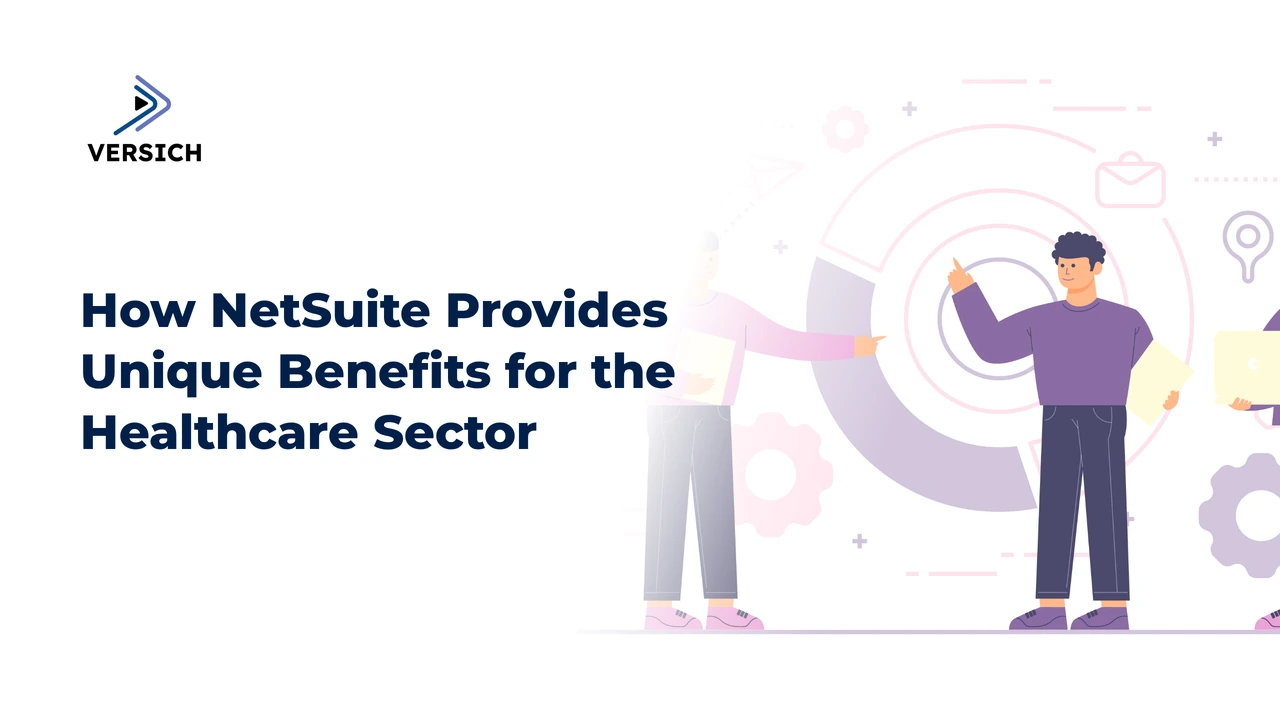
Healthcare institutions have unique technological requirements. The needs for managing finances, overseeing payroll, invoicing, and other financial tasks significantly differ within this sector compared to others. For example, healthcare providers must handle patient co-pays and various payer rates. Oracle NetSuite delivers specialized ERP solutions tailored for contemporary healthcare organizations. Let’s examine how a comprehensive NetSuite healthcare solution can effectively streamline operational tasks across healthcare facilities.
Key Justifications for Choosing NetSuite
Healthcare institutions and businesses within life sciences trust NetSuite for its flexibility and ability to scale, which promotes rapid business growth and peak operational efficiency. NetSuite ERP for hospital management systems and other medical establishments easily adapts to the diverse business needs of today’s healthcare industry.
Providing an integrated perspective on core business operations, complete financial management, and thorough real-time reporting and analytics, NetSuite is all-encompassing in its offerings through a single comprehensive software solution. With NetSuite, healthcare and life sciences organizations can enhance efficiency by reducing the time spent on various business activities, such as inventory management and month-end closures. It also allows medical providers to focus more on patient care with less time spent on administrative tasks.
Important Advantages of ERP in Healthcare Through NetSuite
Extensive financial management features with robust capabilities
Built-in financial controls ensure compliance with regulatory standards
Enables organizations to manage and consolidate various entities
Detailed real-time reports and analytics for deep insights into business metrics
Seamless integration with third-party systems and legacy software like Athena, Epic, Allscripts, etc.
Boosted supply chain efficiency and employee productivity
Strategic Edge Provided by NetSuite
In a landscape dominated by data-driven decision-making, accessing the latest operational statistics is crucial for any organization striving to remain competitive. This is especially true for healthcare providers. Thanks to NetSuite, healthcare organizations gain exceptional visibility into their financial operations, including subsidiaries and invoice tracking.
Real-time and uninterrupted access to data-driven operations is unattainable with fragmented applications. Without an integrated system, obtaining these valuable insights becomes a significant challenge. A CEO or CFO in any healthcare organization can only ensure they are receiving real-time, accurate data through a cohesive software solution rather than relying on disparate order management, sales, and accounting applications.
Here, NetSuite stands out as the ideal choice. Exceptional NetSuite implementation services can assist any healthcare organization in customizing their software automation to meet business needs. By utilizing an integrated solution like NetSuite, healthcare organizations eliminate the need for siloed applications and unify their sales and accounting systems. This enables everyone to access the same version of critical data immediately. Such a streamlined access to important data does not require third-party systems or analytics experts.
Excellence in Customer Service Improvement
To provide exceptional service to clients, healthcare businesses require the most current, accurate, and error-free overview of all customer interactions and profiles. However, this becomes nearly unachievable when traditional CRM systems process customer order information. Repeatedly entering customer data and order details into a CRM for financial transactions creates unnecessary friction.
For healthcare entities, it becomes essential to eliminate these friction points because, in the digital age, most customers expect a seamless experience free from delays. This is particularly vital in healthcare settings, where any delays can have severe consequences. An integrated ERP suite like NetSuite guarantees an enhanced customer experience. Recognized as one of the top cloud-based ERP solutions for small businesses, NetSuite offers seamless integration. Here, organizations can maintain a complete record of customer interactions, from initial consultations to medical claim resolutions.
Boosting Data Security
Using disparate applications necessitates implementing specific security protocols for each one. This involves managing user access, safeguarding data, and deploying fraud prevention tools across multiple software platforms. Ensuring data security across various systems, such as ERP, CRM, eCommerce, and others, elevates the risk of data breaches. A unified suite like NetSuite resolves security concerns by employing a centralized set of security measures across associated systems, simplifying the management of security.
A reliable NetSuite Alliance partner experienced in the healthcare sector can further enhance security configurations tailored to address specific vulnerabilities and threats.
Eliminating the Complexity of Multiple Licenses
Each separate application utilized by healthcare organizations for different operational functions-such as accounting, CRM, financial planning, business intelligence, order management, and eCommerce-demands significant IT resources. The healthcare organization’s IT department must allocate dedicated resources for deployment, integration, management, and seamless upgrades across different systems. Additionally, companies must meet licensing obligations for various software solutions utilized within healthcare facilities.
Here, a unified system like NetSuite offers the significant advantage of alleviating the burden of multiple licensing requirements. By combining various applications into one cohesive unit, the integrated NetSuite solution eliminates the need for separate licenses and liberates IT resources to focus continuously on projects in a streamlined manner.
Fostering Business Growth
Effective financial management is pivotal for ensuring the smooth operation of any organization. Overseeing employee payroll and expenses is essential for maintaining financial viability. When different software applications manage these functions, significant human resources time and energy are consumed in keeping data synchronized. This is where a unified solution like NetSuite excels, keeping processes efficient and organized.
With an integrated software suite addressing all aspects of an organization, the management of human capital becomes significantly more straightforward. The complexity involved in entering individual data across various Human Capital Management (HCM) systems can be entirely eliminated, facilitating a smoother operation. With a comprehensive solution like NetSuite, healthcare organizations can easily enhance operations by streamlining expense management, payroll oversight, and employee record upkeep.
Conclusion
As outlined, transitioning to an integrated software suite like NetSuite allows healthcare organizations to maintain a competitive edge while ensuring maximum satisfaction for their clients. This comprehensive set of tools also enables healthcare institutions to enhance data security, reduce time spent on licensing, and foster quicker growth into new markets while onboarding new personnel. If your healthcare organization has yet to embrace the NetSuite integrated system, it's an opportune moment to consider making that shift.