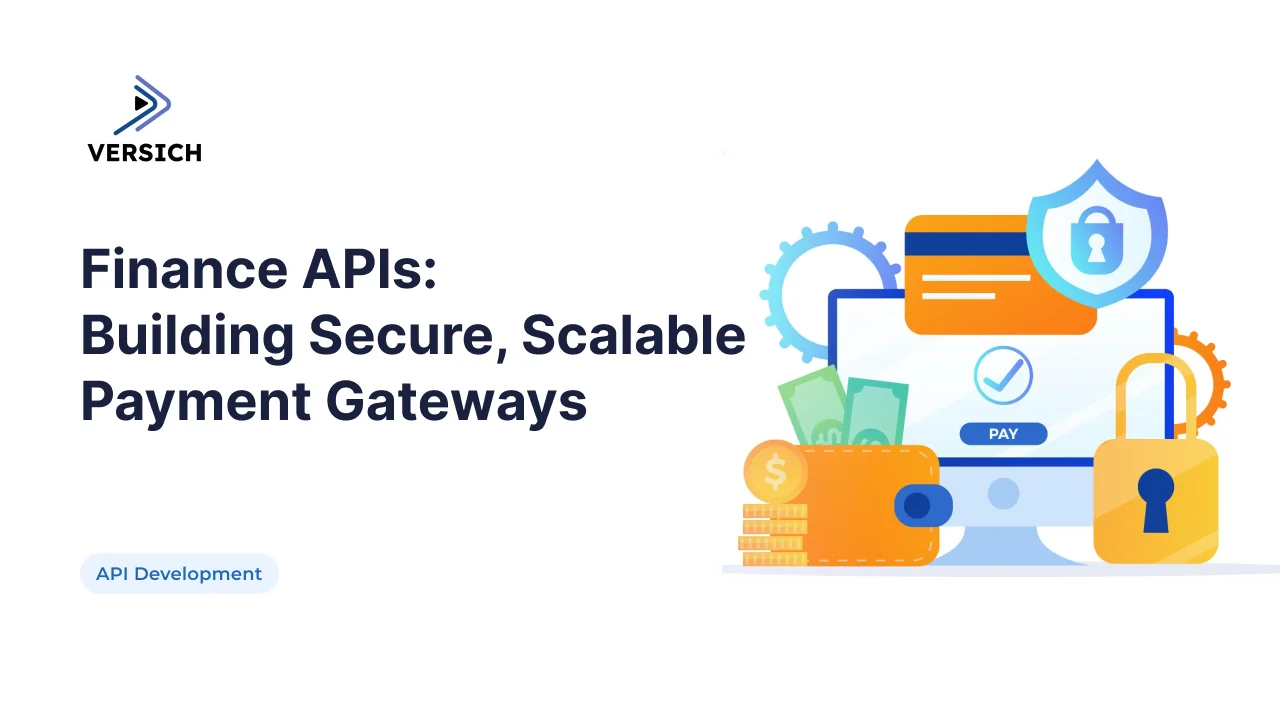
Digital payments are no longer optional, they’re the backbone of modern commerce. From e commerce platforms to fintech startups, every business needs APIs that can process transactions securely and scale with demand. Yet building a payment gateway isn’t just about moving money; it’s about trust, compliance, and resilience.
Finance APIs provide the foundation for this. When designed well, they enable seamless transactions, protect sensitive data, and adapt to spikes in traffic without breaking the bank. In this article, we’ll explore how to build secure, scalable payment gateways with finance APIs, using practical examples, code snippets, and strategies that align with modern practices like microservices, serverless architectures, and CI/CD automation.
Security First: Protecting Transactions
Payment gateways handle sensitive data, card numbers, account details, personal information. Security must be baked in from the start.
Key Practices
- Encryption: Use TLS for data in transit and AES for data at rest.
- Tokenization: Replace card numbers with tokens to reduce exposure.
- Authentication: Implement OAuth 2.0 or JWT for secure API access.
- Compliance: Ensure PCI DSS compliance for handling cardholder data.
Example: JWT Authentication for Finance API
const jwt = require('jsonwebtoken');

function authenticate(req, res, next) {
  const token = req.headers['authorization'];
  if (!token) return res.status(403).send('Access denied');

  jwt.verify(token, process.env.JWT_SECRET, (err, decoded) => {
    if (err) return res.status(401).send('Invalid token');
    req.user = decoded;
    next();
  });
}
This ensures only authorized clients can access payment endpoints.
Scalability: Handling Spikes in Demand
Payment gateways must handle thousands of transactions per second during peak events. Scalability is critical.
Strategies
- Microservices: Break down payment flows into independent services (authorization, settlement, fraud detection).
- Serverless APIs: Use AWS Lambda or Azure Functions to auto scale with demand.
- Load Balancing: Distribute traffic across multiple instances.
- Caching: Reduce database load with Redis or DynamoDB caching.
This approach mirrors lessons from microservices and serverless APIs, where costs align with usage and scaling happens automatically.
Practical Architecture
Microservices Example: Payment Authorization Service
const express = require('express');
const app = express();

app.post('/authorize', (req, res) => {
  const { cardNumber, amount } = req.body;
  // Mock authorization logic
  if (amount < 1000) {
    res.json({ status: 'approved' });
  } else {
    res.json({ status: 'declined' });
  }
});

app.listen(4000, () => console.log('Authorization service running'));
Each service (authorization, settlement, fraud detection) runs independently, scaling as needed.
Serverless Example: Settlement Function
exports.handler = async (event) => {
  const { transactionId, amount } = JSON.parse(event.body);
  // Mock settlement logic
  return {
    statusCode: 200,
    body: JSON.stringify({ transactionId, status: 'settled', amount })
  };
};
Deployed via AWS API Gateway, this function runs only when called, reducing idle costs. For a step by step guide, see our blog on Getting Started with AWS API Gateway.
CI/CD for Finance APIs
Continuous integration and deployment ensure updates don’t disrupt transactions.
jobs:
  deploy-payment-service:
    runs-on: ubuntu-latest
    steps:
      - uses: actions/checkout@v3
      - run: npm install
      - run: npm test
      - run: serverless deploy
Real World Example
A fintech startup needed to process thousands of transactions during flash sales.
- Microservices handled authorization and settlement separately.
- Serverless APIs scaled automatically during traffic spikes.
- CI/CD pipelines ensured updates rolled out safely.
- Cloud monitoring tracked latency and error rates.
Result: Transaction success rates improved, downtime dropped to near zero, and infrastructure costs aligned with actual usage.
How Finance APIs Connect With Other Practices
Finance APIs don’t exist in isolation. They integrate naturally with:
- Global engineering teams, where distributed ownership of microservices keeps development agile.
- Serverless architectures, which align costs with transaction volume.
- CI/CD pipelines, ensuring secure updates without downtime.
These connections highlight that building secure, scalable payment gateways is as much about ecosystem design as it is about individual APIs.
Conclusion
Payment gateways are the lifeblood of digital commerce. Building them with finance APIs requires a focus on security, scalability, and resilience. By combining encryption, tokenization, microservices, serverless APIs, and CI/CD automation, businesses can deliver gateways that inspire trust and handle growth effortlessly.
At Versich, we help organizations design and implement finance APIs that are secure, compliant, and scalable. Explore our API Development Services or DevOps Services to see how we can modernize your payment infrastructure.