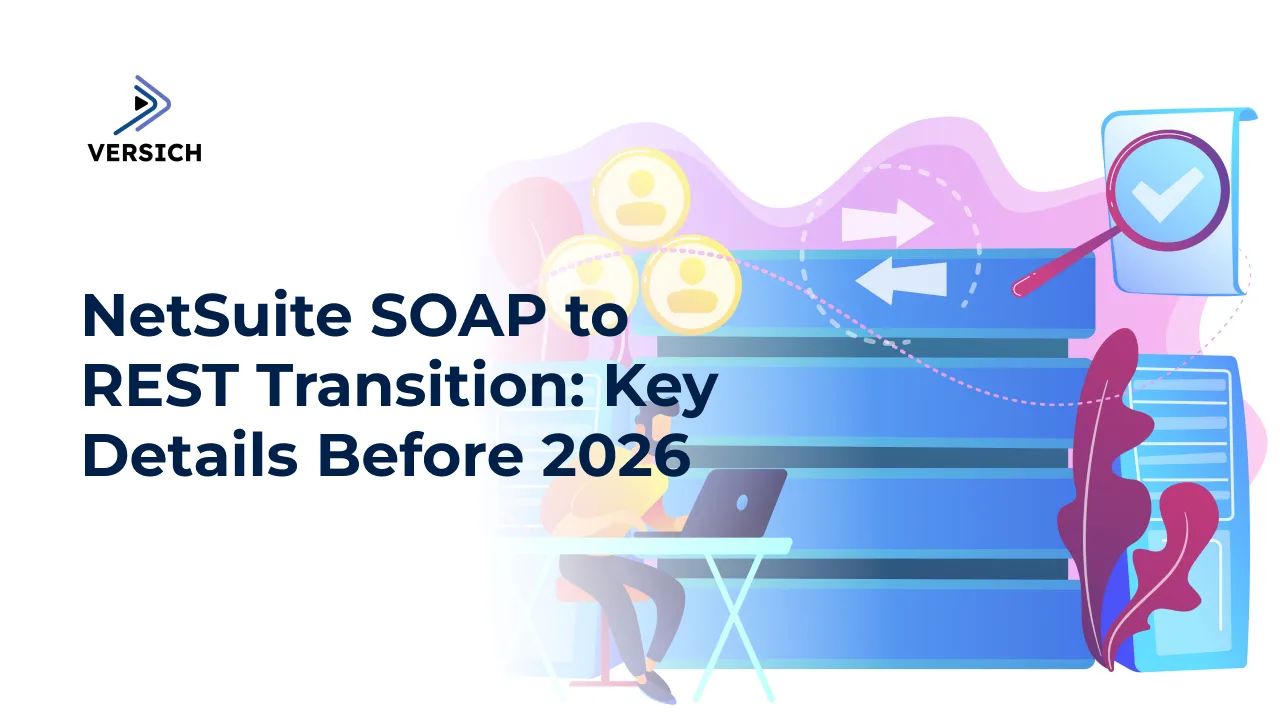
Oracle NetSuite has established itself as a dependable cloud ERP solution since the early 2000s. Over the years, it has enabled various integration methods, including SOAP Web Services, facilitating tasks like bill payments, customer data synchronization, and integration with legacy systems. While these services have served their purpose, the technological landscape is evolving. More streamlined and secure options, such as REST APIs, are becoming standard. Consequently, Oracle plans a significant transition beginning with NetSuite version 2026.1, marking the phase-out of default SOAP Web Services, a change termed NetSuite SOAP Deprecation.
Is your organization still utilizing SOAP? NetSuite is moving towards modern technologies, including REST Web Services and OAuth 2.0, making it essential to consider the future.
Summary: Deprecation of NetSuite SOAP Web Services
With the launch of the NetSuite 2026.1 version, Oracle will discontinue the inclusion of new SOAP Web Services endpoints in each update. New SOAP endpoints will only be added if there is a compelling business or technical requirement. The 2025.2 endpoint will serve as the final regularly scheduled SOAP release and will receive support until version 2028.2. After this period, previous SOAP integrations will no longer receive updates or support. Companies currently employing SOAP Web Services should start preparing for a major transition by moving to NetSuite REST Web Services and updating any existing links to ensure continued operation.
Changes and Enhancements: What’s Different?
NetSuite is executing several critical changes that affect how users connect to the platform. For those already utilizing SOAP Web Services or the older NetSuite.com data source, it's crucial to understand the changes underway and the actions required.
Transition to REST APIs: SOAP-based integrations will ultimately cease functioning. Oracle encourages users to migrate to REST Web Services, which offer faster, more flexible, and secure options. Companies need to evaluate current integrations, reimagine workflows, and start utilizing REST APIs to ensure continuity, lower long-term costs, and adhere to NetSuite's updated integration plans.
Three-Year Support for SOAP. Each SOAP endpoint will have a three-year support duration post-release. For instance, the 2025.2 endpoint will be supported until 2028.2. When this support period concludes, updates or support for that endpoint will cease. It's imperative for businesses to proactively plan integration upgrades to prevent disruptions once support for older endpoints lapses.
Elimination of Automatic SOAP Releases. From version 2026.1 onwards, new SOAP endpoints will not be included in every NetSuite update. Oracle will introduce SOAP updates only when essential. Users who depend on SOAP won’t automatically receive fresh WSDL versions and should start planning their migration to REST APIs to negate future service disruptions.
Conclusion of NetSuite.com Data Source Support Oracle has officially ended support for the NetSuite.com data source starting with version 2025.1, which will be completely phased out by 2026.1. This implies no further fixes or performance enhancements for this data source. All users are required to transition their data queries and reports to the newer NetSuite2.com data source to maintain access to critical business data.
Migration to NetSuite2.com. NetSuite2.com provides improved data reliability and security. It integrates with SuiteAnalytics Workbook and supports SuiteQL, a more advanced query language. SQL queries aimed at NetSuite.com will not function here, necessitating businesses to revise their queries and update tools that depend on the Connect Service for compatibility with NetSuite2.com.
New Authentication Standards: NetSuite is phasing out password-based authentication for integrations. Migration to NetSuite OAuth 2.0 is now necessary for secure communication. These updated methods offer enhanced security and facilitate role-based access. Companies must revamp their authentication frameworks to ensure safe and compliant use of NetSuite Web Services.
Advantages of the Update for Your Business
While immediate migration efforts may be necessary, the transition boosts integration efficiency, enhances security measures, streamlines reporting processes, and prepares your system for future NetSuite versions. Here's what your organization can gain by acting promptly:
Quicker System Integrations: REST APIs operate faster and are easier to manage than SOAP. They utilize lightweight data formats that minimize server load, resulting in improved responsiveness of the system. This allows your ERP, CRM, and eCommerce platforms to seamlessly sync data and maintain operational fluidity, even during high transaction volumes or updates.
Future-Ready Infrastructure: Adopting REST and SuiteQL ensures your framework remains compatible with future NetSuite updates. This approach lessens the risk of depending on unsupported tools and avoids hasty upgrades. Adapting to Oracle’s direction now translates to fewer changes later on, saving time, resources, and labor as your business expands.
Enhanced Data Security: Implementing OAuth 2.0 and Token-Based Authentication offers your system a fortified defense against unauthorized access. These methods align with modern security protocols and simplify permission management. This significantly reduces the possibility of security breaches and ensures adherence to data protection regulations across integrated applications.
Intelligent Reporting Tools The combination of NetSuite2.com and SuiteQL facilitates more advanced, reliable, and consistent reporting. Your saved searches and reports will be aligned, providing more accurate data. With role-based controls and enriched visibility, users will access only the data pertinent to them, enhancing the power and security of your reporting framework.
Key Considerations
The 2025.2 SOAP endpoint will be the last one Oracle issues on a scheduled basis, supported for three years until 2028.2.
Following the expiration of an endpoint’s three-year support, it will cease updates and eventually become non-functional.
For users relying on the NetSuite.com data source, it will be inactive post the 2026.1 update. A shift to NetSuite2.com and SuiteQL is mandatory.
Begin evaluating your current integrations now. Identify which ones utilize SOAP and strategize a transition to REST.
How Can Versich Help?
Versich recognizes that this NetSuite transition is significant and could impact your entire operational framework. We will start by analyzing your existing SOAP Web Services and data sources. Following this assessment, we develop a comprehensive strategy to upgrade to REST Web Services and NetSuite2.com. Utilizing NetSuite Integration with Celigo, we aim to automate numerous aspects of the migration, ensuring you experience no downtime or disruptions.
With our expertise, you can maintain smooth operations during this transition, avoid last-minute challenges, and move toward a secure and future-oriented system.