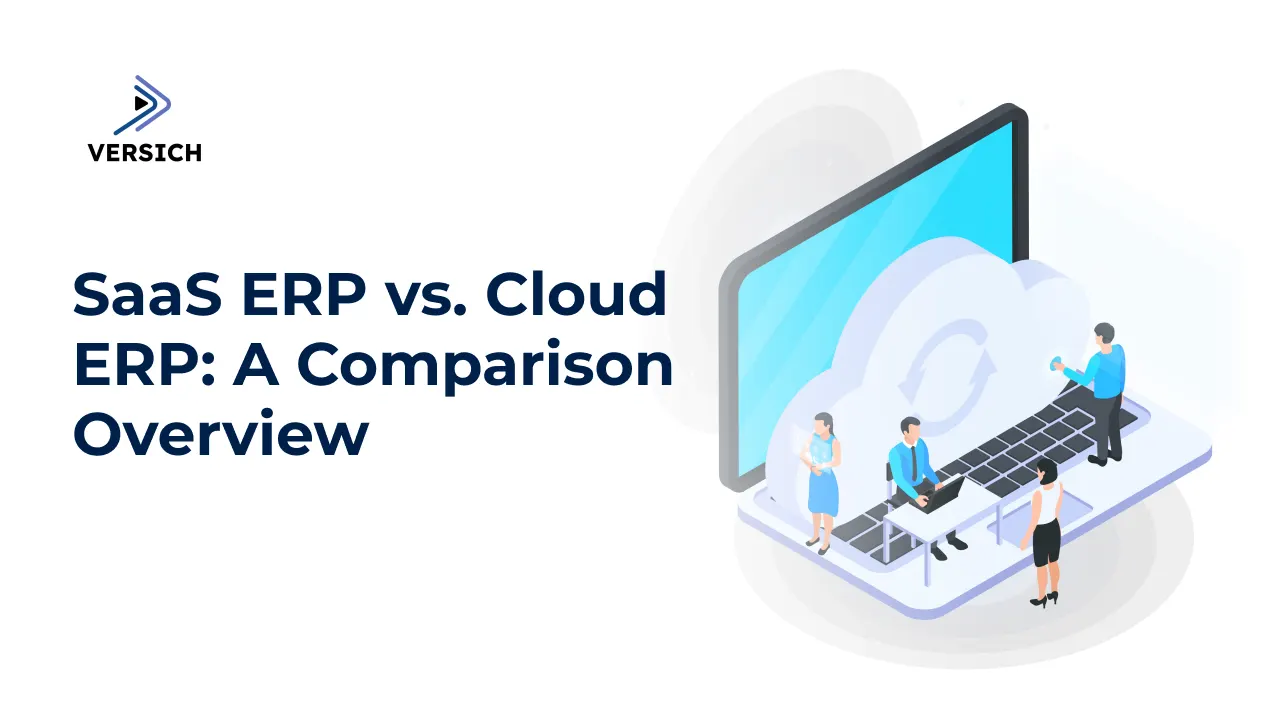
Organizations constantly strive for innovative methods to manage their operations and enhance efficiency. A crucial decision businesses must navigate is selecting the appropriate Enterprise Resource Planning (ERP) system to oversee their essential functions. With the evolution of cloud technology, companies now face the decision between two similar yet distinct options: SaaS ERP and Cloud ERP. Although both models leverage the same technology to provide a variety of functionalities, they significantly diverge in terms of deployment, oversight, and adaptability. Grasping the nuances between SaaS ERP and Cloud ERP is vital for organizations to make a savvy decision that fits their unique needs and objectives. This article will deliver an in-depth comparison of SaaS ERP and Cloud ERP, focusing on their core attributes, differences, and important factors to consider when choosing the most suitable option for your organization.
Understanding SaaS ERP
SaaS ERP (Software as a Service Enterprise Resource Planning) consists of a form of Cloud ERP available via a subscription model on the internet. This type of system enables organizations to manage essential processes such as finance, supply chain, manufacturing, services, and human resources. By utilizing SaaS ERP, businesses pay a recurring fee to access the software online, thereby eliminating the necessity for on-site hardware and software setup. The vendor remains accountable for maintaining, updating, and securing the system, ensuring businesses regularly access the latest features and functionalities. SaaS ERP provides scalability, enabling organizations to adjust their usage effortlessly according to shifting needs. It offers a cost-effective, flexible, and easily accessible solution for companies aspiring to optimize their operations and enhance productivity.
What Is Cloud ERP?
Cloud ERP encompasses any ERP system hosted on a cloud platform, incorporating SaaS, Platform as a Service (PaaS), and Infrastructure as a Service (IaaS). This model affords the flexibility to select from public, private, or hybrid cloud deployment. In contrast to traditional ERP systems, which necessitate installation on local servers, Cloud ERP is hosted on external servers and accessed via a web browser. This model delivers increased flexibility, scalability, and financial benefits, as businesses are not obligated to invest in hardware or oversee software upgrades and maintenance. Cloud ERP solutions can be tailored to meet a company’s unique demands and can be scaled easily to support growth. They also provide real-time data access from any location, facilitating improved decision-making and enhanced collaboration among teams.
Major Distinctions Between SaaS ERP and Cloud ERP
Although both SaaS ERP and Cloud ERP operate on cloud technology, they each possess different attributes that cater to varied business needs.
Deployment Methods
SaaS ERP: SaaS ERP solutions are crafted for swift and uncomplicated implementation. They typically come pre-configured and ready for use. This makes them suitable for businesses seeking rapid deployment of their ERP systems. The simple setup process allows companies to start using their new system in a relatively short time, minimizing downtime and disruption usually linked to ERP implementations.
Cloud ERP: Cloud ERP offers enhanced flexibility in deployment compared to SaaS ERP. Organizations can opt for public, private, or hybrid cloud solutions based on their specific needs and preferences. This adaptability allows for a customized approach, enabling businesses to mold their ERP system to align with unique processes and requirements. This configurability makes Cloud ERP appealing for organizations with intricate operations or specialized industry requirements.
Customization And Control
SaaS ERP: Typically, SaaS ERP solutions offer less customization than Cloud ERP. They are created to serve a broad spectrum of businesses, meaning they may not provide the same degree of flexibility for specific industry requirements or tailored business processes. Additionally, control of the software is limited, as the vendor manages updates and maintenance. This can pose challenges for businesses seeking a high level of customization or wishing to retain more control over their ERP system.
Cloud ERP: Cloud ERP allows for greater customization, enabling businesses to adapt the software to their specific requirements. This can involve customized workflows, fields, reports, and integrations with other applications. Enhanced control is also a vital characteristic of Cloud ERP, as organizations can decide when to implement updates and manage the system according to their own IT policies. These aspects of customization and control are especially valuable for businesses with complex processes or those operating in niche industries.
Scalability
SaaS ERP: The ability to scale is one of the key advantages of SaaS ERP. Organizations can effortlessly add or remove users, modules, or features to align with changing needs. This adaptability makes SaaS ERP an appealing choice for growing businesses or those with fluctuating demands. The capacity to adjust the system without substantial IT involvement or extra hardware costs is a significant benefit of the SaaS model.
Cloud ERP: While Cloud ERP is also scalable, the process can be more intricate, especially for highly customized systems. Although businesses can still adapt their ERP for growth, this may involve additional work. However, the adaptability to tailor the system to specific business requirements means that Cloud ERP can offer a more focused solution for scaling, which can be particularly advantageous for larger firms or those with unique operational needs.
Data Security
SaaS ERP: In the SaaS ERP model, the vendor is in charge of data security, which can present both advantages and disadvantages. On one hand, organizations benefit from the vendor’s expertise and resources dedicated to security measures. Conversely, relying on the vendor's capability to safeguard their data can trigger worries about data sovereignty and compliance with industry regulations.
Cloud ERP: With Cloud ERP, organizations exercise more control over their data security. They can implement their security protocols, determine where data is stored, and guarantee compliance with industry regulations. This level of authority is especially critical for businesses in sectors where strict data privacy and security are necessary. However, it also implies that the organization is responsible for managing and maintaining these security protocols.
Integration Capabilities
SaaS ERP: SaaS ERP solutions may face limitations concerning integration with other systems, particularly if they lie outside the vendor's ecosystem. Although many SaaS ERP vendors provide APIs and integration tools, there may be restrictions on the degree and versatility of these integrations. This can create challenges for organizations relying on a diverse set of software applications that necessitate seamless data exchange.
Cloud ERP: Cloud ERP systems generally provide stronger integration capabilities when compared to SaaS ERP. They can be more readily customized to integrate with a wide array of external applications, databases, and services. This flexibility is essential for organizations with complex IT environments or those seeking to harness data from multiple sources.
Accessibility And Mobility
Both SaaS ERP and Cloud ERP provide remote access and mobility, allowing users to engage with the system from anywhere with internet connectivity. However, the user experience and ease of access may differ based on the vendor and the specific ERP solution.
Cost-Effectiveness of SaaS ERP vs. Cloud ERP
The financial viability of SaaS ERP versus Cloud ERP hinges on the specific needs and circumstances of a business. Cloud ERP might prove more cost-effective for larger enterprises or businesses with intricate processes necessitating extensive customization. While initial costs may be higher, long-term savings from scalability, operational efficiencies, and customization can surpass the upfront expenditure.
Conversely, SaaS ERP typically offers a more budget-friendly solution for small to medium-sized businesses due to its lower initial costs and predictable subscription pricing. It eliminates the need for considerable capital investments in hardware and software, making it an attractive choice for companies with restricted IT budgets. Ultimately, the decision between SaaS ERP and Cloud ERP should be based on an in-depth assessment of both short-term and long-term financial impacts for the business.
Market Trends for SaaS ERP and Cloud ERP
The cloud ERP market continues to thrive, with its global market valuation estimated at $43.60 billion in 2022. Projections indicate robust growth, with expectations of reaching $140.14 billion by 2030, reflecting a CAGR of 15.9% from 2023 to 2030. This growth is driven by the surging demand for cloud-based solutions that provide flexibility, enhanced security, and integration with other cloud services, catering particularly to larger enterprises and organizations with complex needs. The SaaS ERP market is also seeing substantial expansion, projected to experience an 11.6% compound annual growth rate (CAGR) from 2023 to 2027, potentially reaching $87.3 billion by 2027. The increasing uptake of SaaS ERP solutions is largely due to their cost-efficiency, scalability, and ease of adoption, making them especially appealing to smaller and medium-sized businesses.
Limitations of Each Model
Both Cloud ERP and SaaS ERP models present potential drawbacks and limitations:
Drawbacks of SaaS ERP:
Customization Limitations: SaaS ERP solutions are generally designed to serve a broad range of users, which restricts the extent of customization available for specific business needs.
Vendor Dependence: Companies utilizing SaaS ERP are heavily reliant on the vendor for software updates, security, and maintenance, creating concerns about control and flexibility.
Concerns About Data Security: While SaaS ERP providers usually implement robust security measures, some organizations may worry about storing sensitive data off-site and vulnerabilities to data breaches.
Performance Issues and Downtime: As SaaS ERP systems are accessed through the internet, performance can be influenced by network problems, and there might be issues with downtime linked to vendor maintenance.
Long-Term Financial Implications: Although the subscription pricing model of SaaS ERP can be appealing initially, the cumulative costs can escalate over time, particularly as a business expands.
Drawbacks of Cloud ERP:
Higher Initial Investment: Cloud ERP systems usually require a larger initial investment for customization, integration, and implementation compared to SaaS ERP solutions.
Complexity of Integration: The enhanced flexibility and customization options offered by Cloud ERP might lead to more complicated implementations, requiring additional resources and time.
Need for IT Resources: Deploying Cloud ERP requires businesses to possess the necessary IT expertise and resources to effectively manage and maintain the system.
Responsibility for Compliance and Security: Organizations bear more responsibility for ensuring data security and compliance with regulations, which can be challenging without appropriate expertise.
Scalability Costs: While Cloud ERP systems are adaptable, substantial customizations may necessitate further investments as the business evolves.
Identifying the Right Model for Your Business
For Small Businesses:
Reduced Initial Costs: The subscription-based model of SaaS ERP allows for lower upfront investment and predictable recurring fees.
Simple Implementation: SaaS ERP systems are generally faster and more straightforward to deploy since they come pre-configured and require minimal customization.
Lesser IT Demands: With the vendor managing maintenance, updates, and security, small businesses with limited IT resources can still utilize a robust ERP system.
Scalability: SaaS ERP allows small enterprises to easily adjust their operations by adding or removing users and features as required.
For Larger Enterprises:
Customization and Versatility: Cloud ERP systems provide greater customization options, allowing larger businesses to tailor software to their intricate processes and specific requirements.
Control and Security: Larger organizations gain more control over their ERP systems, especially in terms of data security and compliance, which is crucial for businesses with stringent regulatory obligations.
Integration Opportunities: Cloud ERP can be integrated more seamlessly with other enterprise systems and third-party applications, ensuring a smooth data flow across the organization.
Growth Scalability: While both models are scalable, Cloud ERP handles extensive growth and international expansion more effectively.
Timeline for Implementation of SaaS ERP and Cloud ERP
The typical timeframe for implementing SaaS ERP and Cloud ERP can differ based on the complexity of business processes, the degree of customization needed, and the organization’s size. SaaS ERP: Implementing SaaS ERP systems generally takes a shorter duration, ranging from several weeks to a few months. The pre-configured nature of the software and limited customization options contribute to this accelerated timeline.
Cloud ERP: On the other hand, the implementation timeline for Cloud ERP systems can stretch longer, frequently taking several months to over a year. This is due to the greater flexibility and customization options within Cloud ERP, which may necessitate additional time for configuration, integration, and testing to ensure the system addresses the specific needs of the business.
How to Decide Between SaaS ERP and Cloud ERP
Selecting the right option between SaaS ERP and Cloud ERP involves a thorough evaluation of your business's needs, objectives, and resources. Below are some steps to assist you in making a well-informed decision:
Evaluate Your Business Needs:
Identify your core business processes and the specific functionalities required from an ERP system. Consider the necessary level of customization and adaptability to support your operations.
Assess Your IT Infrastructure:
Determine if your current IT infrastructure is capable of supporting a Cloud ERP solution or if a SaaS ERP, which requires less IT input, is more suitable. Analyze your internal IT capabilities and readiness to manage and maintain an ERP system.
Consider Your Budget:
Compare the upfront and ongoing expenses associated with SaaS ERP and Cloud ERP, including subscription costs, customization, and maintenance. Assess the total cost of ownership throughout the expected operational lifespan of the ERP system.
Analyze Scalability Requirements:
Evaluate your growth expectations and scalability needs for your ERP system. Determine the importance of being able to easily add or remove users and features for your operations.
Review Security and Compliance Needs:
Analyze the data security and compliance necessities of your business, particularly if you operate in a regulated sector. Decide if you require a greater level of control over security measures, which Cloud ERP might provide, or if the vendor-managed security of SaaS ERP suffices.
Seek Expert Advice:
Consider consulting with ERP professionals or vendors who can share insights into the advantages and disadvantages of SaaS ERP and Cloud ERP for your particular business context. Request demonstrations and case studies to better understand how each option would function within your organization.
Make Your Choice:
Ultimately, select the ERP model that aligns with your business goals, provides the necessary functionalities, fits your budget, and can scale alongside your company.
Concluding Thoughts: SaaS ERP vs. Cloud ERP
Choosing the right ERP model between Cloud ERP and SaaS ERP is determined by your organization’s unique needs, budgetary constraints, and IT capabilities. Cloud ERP is typically more fitting for larger firms or those with intricate tasks that demand enhanced customization and control, while it offers the flexibility to choose from various deployment methods. SaaS ERP is better suited for small to medium-sized businesses seeking a cost-effective solution that is easy to implement with minimal IT involvement. Understanding your business requirements and seeking guidance from ERP experts is crucial in making an informed choice. Selecting the ERP solution that best aligns with your organizational goals is vital for achieving long-term success.