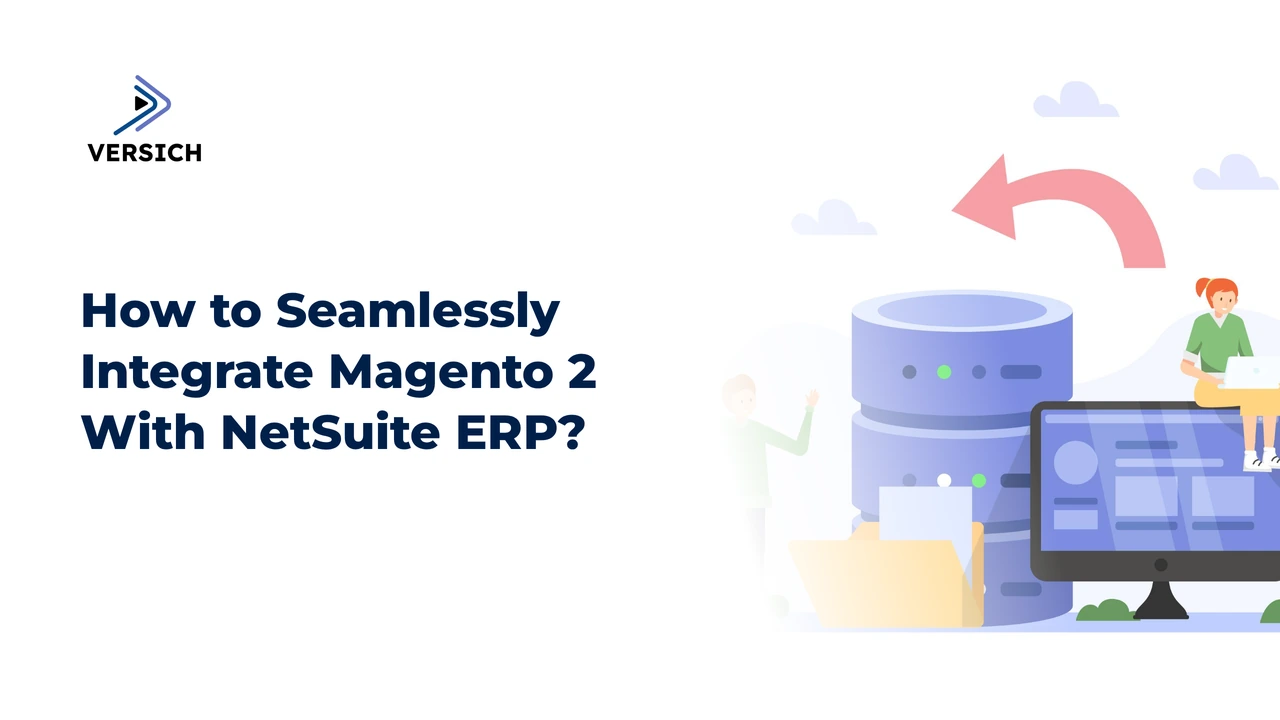
Enterprises, retailers, distributors, and online businesses utilizing a Magento 2 website alongside the NetSuite ERP system tend to miss out on maximizing the benefits of both platforms. Managing separate systems often leads to substantial time investments in coordinating business and operational data. This separation can also heighten the risk of data discrepancies. Fortunately, the integration of NetSuite ERP with Magento 2 can significantly alleviate these issues.
Integrating Magento with ERP systems, especially via NetSuite, is widely favored due to its versatile solutions tailored to meet various business needs. In this article, we will delve into how the integration of NetSuite ERP with Magento works and what users can anticipate from it.
What Can You Anticipate from This Integration?
Through NetSuite's e-commerce integration, businesses can effortlessly sync data between Magento 2 and NetSuite, thus streamlining process automation. This capability enables sellers to automate order fulfillment while providing managers with a holistic view of business operations and data.
The integration of NetSuite with Magento’s ERP system promotes ideal flexibility in inventory management and product shipping, making the entire operation more streamlined. With real-time and comprehensive inventory data visibility, e-commerce businesses can consistently maintain competitive shipping times and ensure a trustworthy revenue flow.
Thanks to this integration, the backend functions of Magento e-commerce stores operate more efficiently, allowing staff and administrators to allocate extra time towards new projects. Additionally, synchronizing information across platforms accelerates order processing and guarantees a uniform customer experience across all channels.
Selecting the Appropriate NetSuite Magento 2 Integration Strategy
Understanding basic expectations from a NetSuite Magento integration is the first step. The next crucial task is selecting the right integration strategy for optimal results. It's essential to acknowledge that merging these two disparate systems introduces its own set of challenges. Ensuring smooth automation of data flow without creating process silos or security issues is always a vital concern. This is where expert NetSuite integration services become essential.
When determining the best integration approach, consider the following factors:
If your business entails intricate processes or unique proprietary needs, a custom integration might be necessary.
Assess the growth rate of your business and how data volume, encompassing customers, orders, products, and categories, is fluctuating. This will guide your choice, emphasizing scalability.
Identify if your enterprise operates in a B2C, B2B, or B2G (business to government) context, as this will influence your approach.
The complexity of integrating suppliers into the system, along with the intricacies in the order fulfillment process, can impact your choice.
Your access to technical professionals and IT resources for the integration endeavor will also be a significant consideration.
Lastly, your financial capacity for the integration will crucially shape your approach.
Every business possesses unique characteristics, which is why integration requirements and approaches will vary. Carefully evaluating your needs and challenges in advance is advisable to select the approach that aligns best with your circumstances.
Key Methods for Integrating Magento and NetSuite ERP
When discussing NetSuite Magento integration, three main approaches stand out. Let's break down each one.
Direct Integration (P2P)
This method is among the most widely used integration techniques provided by vendors developing Magento extensions or APIs for NetSuite integration. Point-to-point integration seeks to synchronize various data components, including orders, inventory, customers, and products, directly between Magento and NetSuite without the aid of an operational or intermediary platform.
This approach is generally less complicated and more cost-effective than other options, which is why it appeals to many sellers and emerging e-commerce ventures in their early growth stages. However, while it boasts simplicity and cost benefits, it has its limitations. The rigidity of peer-to-peer integration can lead to significant frictions as businesses expand. This method typically allows only one-to-one integrations, making the addition of new modules a challenge.
Tailored Integration
For businesses with intricate requirements and the need for scalability, custom integration of the ERP system can be essential for reaping the platform's full benefits. Custom integration is often handled by the company's developers or outsourcing firms. This type of integration entails bespoke coding, requiring a solid understanding of both the NetSuite and Magento 2 platforms.
The process demands significant expertise; any mistakes could jeopardize business data and operational efficiency. Although tailored integration is generally more expensive, it becomes indispensable in complex business scenarios that require advanced scalability. For this approach, enlisting experienced NetSuite integration partners is highly recommended.
SaaS Integration
Perhaps the most accessible and cost-effective method for integrating Magento with NetSuite ERP is using a Software as a Service (SaaS) platform. These pre-configured connectors are designed with specific requirements for linking Magento 2 to NetSuite.
Distinct from point-to-point integration, SaaS connectors can be adjusted and tailored to adapt to changing business needs. Retail companies utilizing these connectors can set parameters for data movement, ensuring optimal data visibility and control.
This integration allows businesses to specify commands regarding order processing based on fulfillment criteria like pricing, geographic locations, or serial numbers in the warehouse. Most notably, this tailored order fulfillment occurs automatically once an order is processed.
While SaaS solutions generally come at a higher cost than point-to-point integrations, they offer numerous features and functionalities while remaining more affordable than custom ERP integration projects. E-commerce merchants can access these services via monthly subscription fees.
Determining the Best Option for Your Business
Regardless of the differences in business requirements, SaaS integration solutions emerge as the ideal choice for harnessing the capabilities of NetSuite ERP in Magento stores. This method is well-suited for a broad range of businesses across both B2C and B2B segments, providing a robust, cost-effective solution.
Custom integration is also a viable option if your organization has the budget for it. Tailored integration is specifically advantageous for enterprises experiencing rapid growth in data volume and dealing with complex business processes.
Conclusion
The integration approaches discussed have been validated through numerous NetSuite and Magento integration projects. With the pros and cons of each method outlined, your decision will ultimately depend on your assessment of various factors.