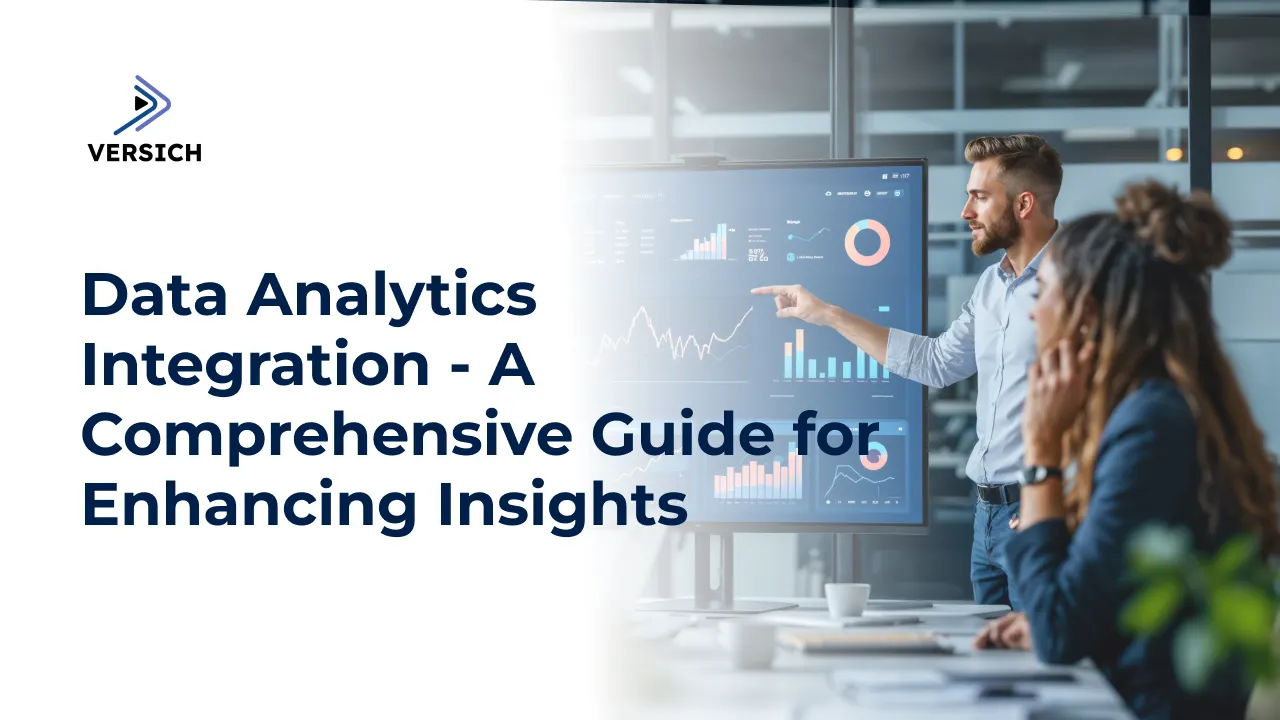
Data analytics integration generally depends on a structured framework for gathering and interpreting data, converting it into actionable insights. In a highly competitive landscape where customer expectations are escalating, leveraging analytics has become imperative for business success. As data analytics specialists, we have witnessed how effectively executed analytics strategies can revolutionize operations. A common element among successful instances is adherence to a standardized 8-step process for data analytics integration. In this article, we will delve into our recommended process for implementing analytics, providing detailed steps along with real-world examples.
Understanding Data Analytics Integration
Data analytics integration encompasses the establishment of systems, tools, and methodologies to collect, transform, and evaluate data, thereby generating insights that inform decision-making. This extends beyond simply acquiring software or functioning with spreadsheets. True integration necessitates embedding analytics into daily operations, enabling businesses to consistently generate, access, and utilize insights where they have the highest relevance.
Differentiating Between Adoption, Integration, and Strategy
Adoption: This stage involves initiating the use of tools or methods, such as designing a dashboard or monitoring customer behavior for the first time.
Integration: This step involves embedding analytics deeply within the organization, connecting systems, automating data flows, and simplifying the actionability of insights.
Strategy: This aspect defines the rationale behind analytics, whether for improving customer retention, optimizing inventory, or enhancing marketing spend efficiency.
Importance of a Data Analytics Integration Plan
Lacking a comprehensive integration plan often results in even sophisticated analytics tools being underutilized or ineffective. A methodical approach guarantees that:
Data flows continuously across various departments.
Insights produced are trustworthy and immediately accessible.
Teams can swiftly address emerging opportunities or challenges.
Technology investments yield tangible returns.
From our experience, organizations that leap into adoption without a clear integration strategy often encounter delays, budget overruns, and unreliable insights.
Step-by-Step Implementation of Data Analytics in 8 Stages
1. Identify Business Goals and Key Performance Indicators
Recognizing the business goals connected to your data analytics initiatives is essential, especially those that tie to ROI. At this point, specifics regarding objectives should be defined, linking them to ongoing processes that impact revenue or costs significantly. Examples of well-articulated analytics objectives include:
Boosting revenue by pinpointing upselling chances within existing customer relationships.
Lowering equipment replacement expenses through real-time tracking of machinery location and upkeep.
Enhancing marketing ROI by discovering which channels yield customers with high lifetime values at minimal acquisition costs.
The subsequent step is determining pertinent Key Performance Indicators (KPIs) that will gauge your progress towards these goals. Additionally, it’s vital to establish supporting KPIs to measure the influence of various factors on the primary KPIs. For instance, if the goal is to elevate marketing ROI, supporting KPIs could encompass cost per click, conversion costs, and number of impressions.
2. Evaluate and Gather Data
Following the identification of your data analytics goals, the next phase involves determining which data sets can be utilized for analysis. At this stage, we advocate for adherence to our data governance model, which includes identifying potential data sources, evaluating data quality, and designating responsibility for data management.
The next phase, data gathering, can involve sourcing data from both internal and external origins, whether through manual or automatic means. Manual data gathering often entails exporting information into Excel for periodic refreshes. Conversely, automated data integration can involve data scraping or API connections.
3. Data Cleaning and Preparation
This stage focuses on rectifying data issues such as missing entries, misspelled categories, and conflicting data types with the use of formulas. Data analysts typically dedicate a significant portion of their time during analytics projects to data cleaning, as the manipulations required are often unique to each data set and cannot always be automated.
Common data cleaning procedures comprise:
Addressing missing values, which may be removed or substituted. In some projects, analysts estimate missing values and replace them with predictions.
Eliminating duplicates, which can hinder the establishment of relationships between data sets, necessitates aggregation or removal of duplicate entries.
Assigning data types correctly when columns contain mixed values, ensuring compatibility for mathematical operations.
Creating custom columns to group values for more meaningful later analyses.
Filtering and omitting irrelevant columns to expedite data processing in the model.
Merging data sets so that rows and columns from various sources are combined into a single table.
4. Conduct Data Analysis
This process involves developing formulas for KPIs and computing their values across various levels of granularity. Ensuring accuracy is paramount at this stage, prompting stakeholder involvement in quality assurance checks.
For predictive analytics projects, this phase also encompasses:
Evaluating model performance, analyzing metrics like false positives, accuracy, and precision.
Refining models by experimenting with diverse feature sets to enhance predictive accuracy metrics.
Selecting the most effective predictive model based on performance metrics.
At this juncture, data analysts should compare their findings against original business goals, questioning whether the analysis effectively responds to initial inquiries. If affirmed, progress to the next stage can occur.
5. Visualizing Data
Data visualization involves presenting analytical outputs through graphs, promoting easier comprehension and analysis. Visual representation aids in uncovering trends and patterns not typically seen in standard data tables. Additionally, it assists non-technical stakeholders in grasping data without feeling inundated by tabular formats. Here are some useful strategies for effective data visualization:
Formulate dashboards that aggregate multiple graphs on a single page to provide contextual information. Tools like Power BI and Tableau facilitate easy dashboard creation.
Choose appropriate visualization types, understanding each graph's specific use to prevent confusing your audience.
Abide by established data visualization principles that explain human visual interpretation, enhancing clarity in data communication.
6. Understanding Results and Making Informed Decisions
Individuals with advanced business knowledge interpret analytical outcomes, making decisions based on the insights derived. Familiarity with operational processes enables informed conclusions regarding the trends revealed during the analysis.
Data analysts typically collaborate with stakeholders, ensuring comprehension of the calculations underpinning their analyses. Once the results are interpreted, stakeholders generally proceed to make operational or strategic decisions, typically at this juncture achieving ROI from their analytics investments.
7. Evaluating Performance Changes
This refers to monitoring performance after implementing decisions influenced by analysis. The paramount objective is identifying whether these choices have improved, deteriorated, or had negligible effects on performance. Analysts assist stakeholders in this phase through various methods, including:
Assessing the effects of external factors-sometimes fluctuations in targeted metrics may correlate with seasonal changes or broader industry dynamics. Analysts help isolate these external impacts from strategic decisions.
Formulating new hypotheses if anticipated outcomes are not realized, and identifying additional elements that may influence key metrics.
8. Maintaining and Iteratively Developing Solutions
The maintenance phase involves refreshing data analytics solutions with new information and ensuring accurate data without inaccuracies. Data analysts' primary aim is to uphold data accuracy and facilitate successful data updates, allowing stakeholders to continue making informed decisions based on robust analysis.
As stakeholders utilize data analytics solutions, they may begin posing new questions regarding the data. Analysts respond to these inquiries with additional analyses and visualizations, embodying the iterative development approach.
Advantages of Implementing Data Analytics in Business
Enhanced Decision-Making and Forecasting
Data-driven decision-making minimizes assumptions, empowering businesses to act with assurance. For instance, Versich assisted a logistics company in developing predictive models that forecast delivery delays influenced by traffic and weather conditions. This proactive strategy enabled adjustments in routes, resulting in a 20% decrease in late deliveries.
Greater Customer Insights and Personalization
Personalization has shifted from luxury to necessity. Analytics allows businesses to comprehend customer preferences, purchasing behaviors, and journey maps. Versich's teams have empowered e-commerce clients to create customer segmentation models, driving targeted marketing initiatives that led to a 30% increase in repeat purchases.
Cost Reduction and Operational Optimization
Analytics highlights inefficiencies and identifies areas of excess. By implementing automated reporting solutions, numerous Versich clients have minimized time devoted to manual tasks, enabling teams to concentrate on strategic initiatives.
Competitive Advantage via Predictive Analytics
Anticipating events enhances business competitiveness. A financial services client partnered with Versich to create risk assessment models predicting loan defaults. This strategic insight enabled them to refine approval criteria and lessen exposure to high-risk accounts.
Frequent Obstacles in Data Analytics Integration
Through extensive collaboration with clients, we have identified several common hurdles they encounter. Below are these challenges:
Inadequate data quality and silos: Sometimes data may be incomplete, outdated, or isolated in separate systems, complicating analysis and leading to mistrust.
Insufficient executive support: When leadership fails to endorse analytics initiatives, project advancement and resource acquisition become challenging.
Selecting inappropriate analytics tools: Choosing mismatched tools can squander valuable time and resources, resulting in lackluster outcomes.
Skills void within the workforce: Teams may lack the necessary expertise to efficiently utilize analytics tools, hindering momentum.
Compliance and security worries: Mishandling sensitive data without appropriate security measures or adherence to regulations like GDPR can cause legal issues and erode trust.
Best Practices for Successful Data Analytics Integration
Let’s explore the recommended best practices for achieving success in data analytics integration. These insights stem from our experiences on client projects:
Start Small and Expand Gradually: Avoid attempting to tackle every issue simultaneously. Initiate with smaller projects to experiment and learn, progressively scaling as experience and confidence grow.
Ensure Stakeholder Agreement: It's vital that all participants, from executives to team members, understand the purpose and advantages of analytics initiatives. Effective communication fosters support and facilitates smoother integration.
Prioritize Data Safety and Compliance: Adhere to best practices and regulatory guidelines when managing data. Safeguarding customer information and ensuring compliance with industry standards like GDPR or HIPAA mitigates risks.
Invest in Data Literacy: Equip your personnel with skills to navigate analytics tools and understand the significance of data. Training fosters confidence and empowers teams to make educated, data-driven choices.
Track Quantifiable KPIs: Establish clear objectives and metrics to evaluate the impact of analytics on the organization. Monitoring advancements clarifies what strategies are successful and where enhancements are necessary.
Choosing Tools and Platforms for Data Analytics Integration
Selecting suitable tools requires careful evaluation of functionality, cost-effectiveness, scalability, and user-friendliness. Some notable platforms include:
Power BI: Ideal for businesses seeking interactive dashboards seamlessly integrated into Microsoft’s ecosystem.
Tableau: Provides extensive visualization capabilities while facilitating data storytelling.
Google BigQuery: Suited for processing large datasets for querying and analytics.
Looker Studio: A favorable selection for organizations utilizing Google’s suite of tools.
When choosing tools, consider:
Scalability: Can the solution adapt as your business evolves?
Cost: What are the initial and ongoing costs involved?
Integration: Is the tool compatible with your current systems?
By considering these aspects, organizations can ensure a successful data analytics integration journey.